
The Story
Why it exists.
The beginning
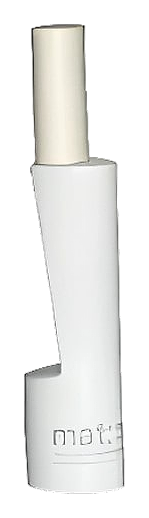
In 2000, Masaki Matsushima turned his Tokyo-trained eye toward fragrance, partnering with French house Panouge to build a collection that worked like a color wheel. Each scent carried a single hue as its name, mat; white, mat; orange, mat; yellow. The brief was simple: translate a visual cue into scent. For white, the answer was lily of the valley and white musk, soft and airy notes that could embody the absence of color itself. Jean Jacques composed the fragrance in 2004, working within a deliberately short palette. No dramatic arcs. No theatrical storytelling. Just restraint.
What makes mat; white unusual is the density of its opening relative to its lifespan. Bamboo sap and watermelon create an immediate coolness, almost medicinal in its purity, before the composition softens into white lotus at the heart. The transition isn't gradual. It arrives, then it's gone, replaced by something quieter. Reed and white musk in the base ensure the drydown stays intimate, close to the skin rather than filling a space. The structure rewards patience: you're not meant to notice everything at once. You notice it over hours.
The evolution
The opening hits within seconds, watermelon and bamboo sap arriving together like water poured over warm stone. There's a mineral clarity here, almost green, that lasts maybe twenty minutes before the heart takes over. White lotus and lily of the valley arrive softly, not replacing the opening but dissolving it. The transition feels like morning fog lifting. By hour two, the aquatic quality fades entirely, replaced by something skin-close: white musk and the faintest ghost of reed. On fabric, the drydown can linger into the next day, clean, minimal, the kind of smell that makes you check if you've actually applied anything. On dry skin, the performance shortens. The scent becomes quieter faster, which some wearers read as weakness and others read as discretion.
Cultural impact
Mat; white occupies a specific corner of early-2000s niche fragrance: the quiet, minimal, Japanese-influenced aesthetic that predates the oud and amber wave by several years. It shares DNA with Comme des Garçons fragrances of the same period, anti-spectacular, anti-commercial, interested in what scent can say without shouting. The limited production and discontinuation have given it a collector status among those who prize restraint over impact.