The Story
Why it exists.
The beginning
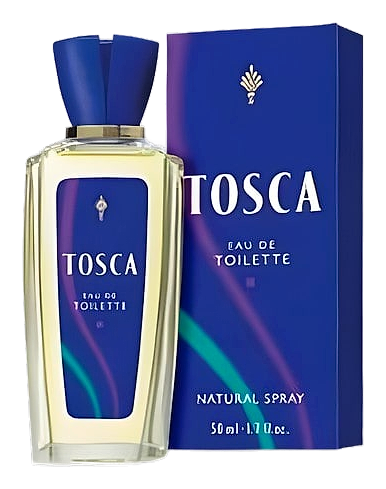
Tosca arrived in 1921, when perfumery was still learning what it could say. The name may have been borrowed from elsewhere, but the fragrance spoke its own language. It spoke of clarity. Of structure as a form of elegance. The goal, as best we can read it, was a feminine fragrance that didn't apologize for being feminine: aldehydes gave it sparkle, citrus gave it brightness, and the floral heart gave it warmth. The base anchored it to earth. A century later, the formula holds. The intention holds. That speaks for itself.
What makes the Tosca pyramid interesting is its refusal to rush. The aldehydes don't just open, they prepare. They're the curtain rising, the pause before the first note. The citrus that follows (bergamot, lemon, neroli, orange) isn't the sharp assault of modern citrus fragrances. It's measured. Considered. The florals, ylang-ylang, jasmine, rose, narcissus, lily of the valley, arrive together like a chorus, none dominating, all contributing to a whole that's greater than the sum. Then the base: labdanum, amber, vanilla, patchouli. Not a conclusion. A landing.
The evolution
The opening is aldehydes first, citrus second, a fizzing brightness that gradually settles into something smoother. The bergamot and neroli take over, with orange providing warmth underneath. By the time the florals begin their slow bloom, jasmine leads, then ylang-ylang, then the quieter rose and lily of the valley. The narcissus adds a slight green edge that keeps the heart from becoming too sweet. This is the fragrance's most expressive moment, when it reads most clearly as a classic aldehydic floral. The drydown is where patchouli and vanilla do their work. Neither dominates. Labdanum bridges the florals and the base, creating a warm, resinous finish that stays close to the skin. On fabric, it lingers for hours. On skin, the presence is quiet but persistent.
Cultural impact
Tosca has spent over a century in circulation, a rare feat for any fragrance, let alone one from 1921. It's been reformulated, repackaged, reissued. The fragrance itself never really left. Among fragrance historians and collectors, it's considered a foundational floral aldehyde, a reference point for understanding how aldehydes function in classical perfumery. For wearers today, it offers something distinctive: a fragrance that doesn't demand to be noticed. It waits to be discovered.