The Story
Why it exists.
The beginning
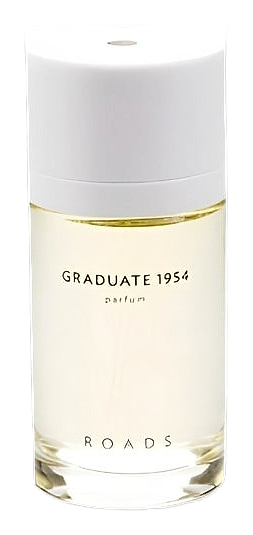
The name is the brief. 1954, the year Chanel reopened on Rue Cambon and her tweed suit conquered the world. Roads built Graduate 1954 around a specific kind of woman: one who understood that elegance could be strategy, that femininity was a language she chose to speak fluently. Not a perfume about restraint. One about what you do with it.
What makes this work is the push and pull. Aldehydes lift the florals into something sparkling and almost skeletal, that mid-century clarity that reads as intelligence rather than sweetness. Then the white florals arrive in full: tuberose and frangipani with their creamy, slightly narcotic warmth. Clove threads through as a spice note, not a Halloween effect, warm and numbing, keeping everything honest. The heliotrope adds that powder-soft finish, like face powder on skin. It's a composition that refuses to be one thing.
The evolution
The aldehydes hit first, sharp, bright, a quick flash of something old and refined. Within minutes the florals take over, but they don't flood the room. Tuberose emerges from the frangipani cream, edged with clove warmth that keeps the sweetness honest. The heart lasts the longest: a full, creamy floral with a spicy undertone that stays close to the skin rather than announcing itself. By hour three the base arrives, moss, cedar, patchouli, sandalwood. Dry and earthy. The florals linger inside it, ghosting softly. On fabric the scent holds into the next day. On skin it's intimate after eight hours but never gone.
Cultural impact
Graduate 1954 arrived in 2014 alongside Roads' first trio, Clockwork, Harmattan, and Neon, but it went in a different direction. Where those scents were bright and immediate, Graduate 1954 was complex and layered, built for someone willing to sit with a fragrance. The concept, femininity as strategy, strength through elegance, positioned it as a quieter, more intellectual proposition within the Roads catalogue. It found its audience among wearers who wanted mid-century elegance without the museum glass: complex enough to reward attention, warm enough to stay with them.