
The Story
Why it exists.
The beginning
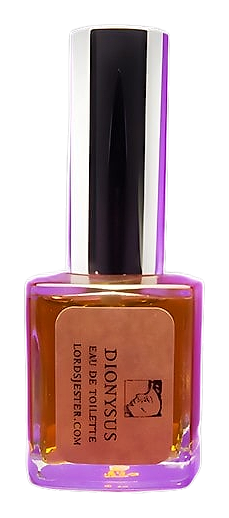
Dionysus takes its name from the Greek god of wine, ecstasy, and liberation from the everyday self, a fitting subject for a composition that leans into excess. Adam Gottschalk is credited as its perfumer, and the scent is named for a deity whose domain is pleasure and transgression, which feels less like marketing and more like an honest signal of intent. The formula runs deep, reportedly seventeen notes stacked into a dense aromatic blend where every layer has to coexist without any chemical scaffolding to soften the joins. What results is a composition that refuses to behave like a conventional floral.
Spikenard and costus root are the rarities worth noting. Both are ancient perfumery materials with deep animalic, almost sweaty warmth that carries an unmistakable feral edge, the kind of note most modern compositions treat with caution because the balance is genuinely difficult to strike. Here they're left raw and unapologetic. The spikenard does most of the heavy lifting in the drydown, carrying that feral warmth far into the late stages without losing its shape or surrendering to something cleaner.
The evolution
The opening smells like a warm room where someone just poured cognac, boozy, spiced, sharpened by black pepper and the green-woody snap of Brazilian rosewood. Orange blossom threads through the edges, sweet and slightly soapy, but it can't hold the center for long. Then the florals arrive, and they don't ease in. Tuberose comes first, oily and narcotic, followed by honeysuckle and a dense jasmine that feels almost candied. Narcissus adds a green-floral sharpness underneath. This is the phase where the composition thickens rather than fades, the white florals building on themselves, getting denser, warmer, more animalic as time passes. Eventually the cognac warmth from the opening fully merges with the base. Costus root and spikenard take over, giving the drydown a wet, almost sweaty musk quality that's balanced by ambrette's clean warmth.
Cultural impact
Dionysus has earned attention for its refusal to soften its edges. The animalic warmth from spikenard and costus root marks it as a composition that's uninterested in easy appeal, the kind of scent that attracts wearers who want something confrontational on skin. It belongs to a tradition of perfumery that treats the fragrance as an object of craft rather than a commercial product, where density, difficulty, and the feral register aren't bugs but features. For the right wearer, that pushback is exactly the point.