The Story
Why it exists.
The beginning
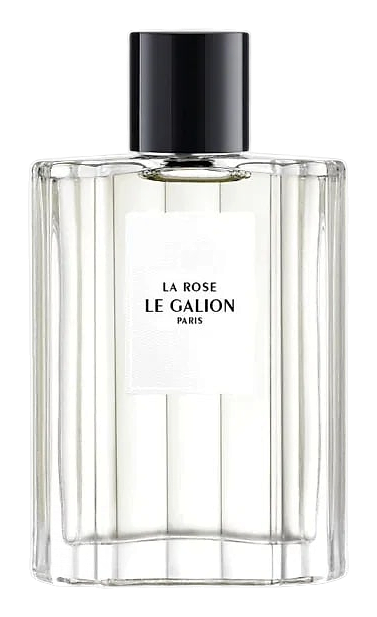
La Rose arrived in 2014 from the Paris atelier of Le Galion, composed by Thomas Fontaine. Le Galion had been quiet for decades by then, a Left Bank house founded in 1930 that most collectors associated with its vintage Vacher-era formulas. La Rose marked a deliberate move into a fresher, more contemporary register while staying inside the house's classical French structure. Fontaine's brief was a rose that didn't behave like a rose, a flower stripped of the powdered, jammy associations the genre had accumulated. The result leans into cool water, green leaves, and a chypre backbone that feels more 1970s Parisian salon than 2010s mainstream launch.
What's structurally interesting here is the inversion of the usual rose formula. Most rose fragrances build the flower on a bed of supporting sweetness, vanilla, honey, or white musks that round out the petals. La Rose does the opposite. The violet leaf and aquatic notes push the rose into a cooler, almost mineral register, while peach adds a green fruit tartness rather than the candied depth it usually provides. The patchouli in the base is the structural anchor, earthy and slightly raw, giving the composition a chypre discipline that the water notes alone couldn't sustain. The lily and ylang-ylang in the heart serve as texture, not statement, lifting the rose without smothering it.
The evolution
The first ten minutes belong to violet leaf and bergamot, green and sharp, almost like the smell of a stem snapped between fingers. Then the water notes arrive, and the rose appears in this cool, clean space, lifted by peach and a touch of lily. The ylang-ylang flickers in and out, adding a faint golden warmth that keeps the heart from feeling sterile. By the two-hour mark the aquatic notes have receded, and the rose begins to smell warmer, denser, more like the real flower. The base settles in gradually: cedar first, then patchouli, then a soft vanilla and musk blend that softens the chypre edges. After six hours what's left on skin is a close, warm musk with a trace of vanilla and the ghost of patchouli, intimate and clean, more like fresh laundry than a fragrance. On fabric it persists longer, holding the rose and cedar well into the next day.
Cultural impact
La Rose sits in a quiet corner of the rose genre, closer to the green, dewy tradition than the modern gourmand or musky school. Wearers tend to be people who want a rose that doesn't announce itself, a daily floral with enough chypre backbone to feel composed rather than decorative. It reads as a connoisseur's pick rather than a mainstream hit, the kind of fragrance someone finds through research rather than a department store counter.