The Story
Why it exists.
The beginning
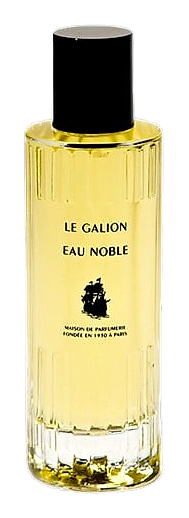
Eau Noble arrived in 2014, composed by Marie Duchêne for Le Galion. The creation draws from the classical structure of French perfumery, building something that feels both grounded in tradition and immediately wearable. Duchêne worked with the house's understanding of balance and composition, allowing the fragrance to speak in a language that feels natural rather than forced. The result isn't nostalgia. It's translation.
What makes Eau Noble distinctive is the way Duchêne handles the handoff between phases. Where many fragrances treat top, heart, and base as separate acts, this one maintains continuity. The citrus-herb opening doesn't disappear, it settles into the floral-herbal heart and eventually the mossy base, becoming part of something larger rather than vanishing entirely. It's a slow reveal, which suits the house's philosophy of rewarding patience.
The evolution
The opening hits sharp. Citron and mandarin orange arrive with galbanum's green bite, tempered by chamomile's cool herbal edge. It's bracing, the kind of freshness that wakes you up before you've finished spraying. The citrus holds for the first hour, gradually giving way as lavender, marjoram, and geranium establish themselves. Neroli and jasmine flicker within the herbal field, never quite dominant, keeping the heart from becoming sweet. Cedar arrives midway through the second hour, adding dry structure. Then the base takes over: oakmoss, sandalwood, patchouli, labdanum. The civet announces itself quietly, a warm, animalic breath close to the skin, not aggressive but definitely present. Musk softens everything into a mossy warmth that lingers. The sillage remains moderate throughout, intimate and restrained, present without announcing itself to the whole room.
Cultural impact
Eau Noble offers something more interesting than reformulation nostalgia: the structure intact, the attitude its own. The fragrance provides a bridge for those curious about classical perfumery without demanding they accept everything the tradition offers. Among those who seek out chypres and fougères, the response has been consistent and enthusiastic. It presents a case for the continued relevance of these forms, showing that they can still surprise and satisfy when handled with care. The composition brings confidence to a space where subtlety often gets mistaken for weakness, proving that restraint can be its own form of strength.