The Story
Why it exists.
The beginning
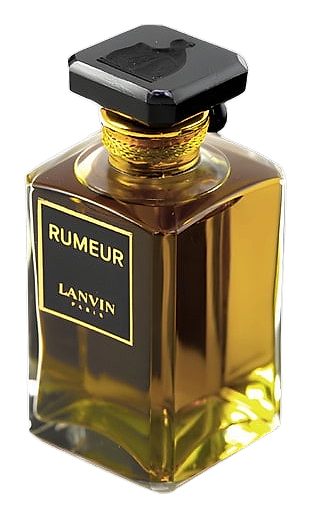
André Fraysse created Rumeur in 1934 as a statement in the language of chypre. What emerged was a composition of unusual complexity, aldehydes at the top for brightness and elegance, plum and peach to soften the entry, then a full complement of warm spices in the heart (cloves, nutmeg, cardamom) before the base delivered what the chypre form demands: leather, oakmoss, civet. The aldehydes shimmer against the skin, giving the opening a waxy luminosity that feels both vintage and timeless. The plum and peach don't arrive as a single note but as layers, the plum adding depth and a slight tartness while the peach contributes a velvety softness that keeps the aldehydes from feeling too sharp.
Nine base notes is unusual even for an extrait. Leather, oakmoss, civet, patchouli, vetiver, tobacco, sandalwood, vanilla, green notes, the pyramid has weight at the bottom that most modern fragrances have learned to avoid. This isn't an accident. Fraysse built Rumeur for a wearer who wanted the full arc: the aldehydic brightness at the opening that announces sophistication, the slow reveal of jasmine and spice through the heart, and a drydown that pulls no punches. The civet is the structural secret. It adds animalic depth, a warmth that reads as skin-like and intimate rather than aggressive.
The evolution
The opening is aldehydic and bright, that waxy, shimmering quality that defines the great fragrances of the 1930s. Plum and bergamot arrive quickly, the peach adding a soft sweetness that tempers the aldehydes before they peak. Forty-five minutes in, the jasmine surfaces. The cloves and cardamom are there too, but they don't announce themselves, they warm the heart from underneath, adding depth without drama. By the second hour, the top notes have receded and the base takes over. This is where Rumeur becomes itself. The leather emerges first, then the oakmoss, that dark, mineral, forest-floor quality that defines a true chypre. The civet is present but not aggressive in good vintage bottles; it reads as warmth, as skin, as something that belongs to the wearer. The vanilla and sandalwood arrive last, softening the edges.
Cultural impact
Rumeur arrived in 1934 during a transformative period for women's fashion and perfumery. Jeanne Lanvin had already built her house into a symbol of Parisian elegance. The fragrance was released just five years before World War II would reshape European culture. André Fraysse crafted a chypre that chose animalic complexity and leather over the sweeter florals of the era. The discontinuation and multiple re-releases trace a complex narrative: the original launch, a discontinuation in 1971, a re-launch in 1979, and another shutdown in 1982.