
The Story
Why it exists.
The beginning
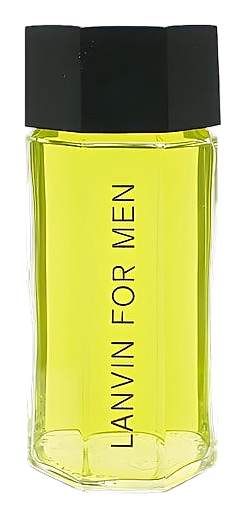
Lanvin for Men arrived in 1979, crafted by André Fraysse, the same perfumer who had shaped the house's feminine identity since the 1920s. His work on Arpège and Mon Péché established a house standard: richness without apology, materials that last, compositions that feel earned rather than assembled. For the masculine entry, Fraysse faced a question the house had never had to answer in fragrance form: what does Lanvin confidence look like in a man's cologne?
The answer sits in the accord structure. Bergamot and clary sage open with the crispness of a freshly pressed shirt, clean, sharp, almost medicinal in the best way. But Fraysse wasn't interested in clean alone. Into the heart he placed jasmine and rose, florals more commonly associated with feminine composition, and let them sit alongside carnation and marjoram. The result is a masculine that doesn't fear softness. The base is where Fraysse's intent becomes clear: leather, vetiver, labdanum, and civet. That last material, natural civet, the waxy, animalic extract, is the tell. It's not hidden. It's the signature.
The evolution
The opening arrives quickly. Bergamot and lemon hit first, citrus-bright and green-edged, with clary sage lending an herbal coolness that reads almost mentholated in the first minutes. Petitgrain threads through, bitter orange leaf, a subtle woodiness that keeps the citrus from feeling like cleaning product. Ten minutes in, the florals arrive. Jasmine and rose don't compete with the opening. They soften it, warm it, make it breathe. Carnation adds a peppery spice that keeps the composition from going soft. By the second hour, the top notes have receded and the base takes over. Leather and vetiver form the structural spine. Labdanum, sticky, resinous, faintly balsamic, wraps around them. The civet surfaces here, not as shock value but as binding: a warm, animalic depth that makes the whole composition feel inhabited rather than designed. On skin, it projects moderately, close enough to feel intimate, far enough to announce presence when someone leans in.
Cultural impact
Lanvin for Men has persisted as a reference point for what masculine chypre can do when it refuses to play safe. The civet in the base, real, not simulated, gives it a warmth that modern synthetic animalics spend fortunes approximating. Wearers who return to it describe the same thing: it smells like it was made from something, not assembled from a palette. In a market increasingly dominated by ambroxan andIso E Super, that difference is not subtle.