
The Story
Why it exists.
The beginning
Sarabe arrived in 1980 from Juvena, a Swiss house. The name itself, Sarabe, carries a certain mystery: the research doesn't tie it to a specific place or person. The intent behind the fragrance was clear from its architecture: a full oriental that opens with ceremony and earns its warmth over time. Aldehydes introduce the composition with a bright, waxy presence that feels both refined and commanding. Bergamot and citrus lift the top notes, but the aldehydic character doesn't vanish quickly, it lingers beneath the spice, threading through the heart. Clove and cinnamon arrive with genuine warmth, the kind that draws a room in. As the minutes pass, rose and jasmine emerge, rich and almost tangible, before iris smooths everything into a more composed register.
What makes Sarabe structurally interesting is how the aldehydes don't disappear, they transform. The bergamot and citrus open the top, but the aldehydic character persists beneath the spice, lending the heart a faintly waxy warmth that gives it a distinctive character. The clove and cinnamon in the heart are not subtle either; they're the kind of warm spice that makes a room lean in. These materials work together to create a heart that feels both spicy and floral, with the aldehydes threading through and adding an almost metallic brightness that keeps everything feeling alive.
The evolution
The opening is an event. Aldehydes and bergamot arrive with a waxy, almost metallic brightness, the scent of something polished and deliberate. Orange and fruity notes soften the aldehydes just enough to keep them from reading harsh, but make no mistake: this is a statement entrance. Within fifteen minutes, the heart begins to show, clove and cinnamon first, then the ylang-ylang swelling underneath. The rose and jasmine arrive together, rich and almost tactile, before iris takes over the powder register and smooths everything into something more composed. By the third hour, the base notes begin their slow assertion: tolu balsam, benzoin, and frankincense building a warm, resinous architecture. The vanilla doesn't arrive all at once, it creeps in gradually, softening the resins into something that smells closer to warm skin than perfume.
Cultural impact
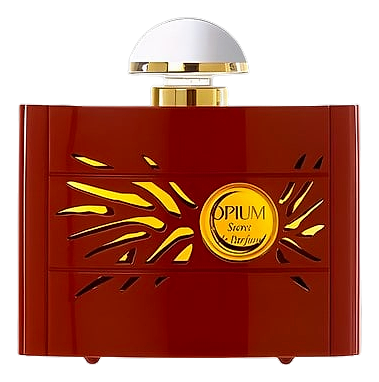
Sarabe arrived in 1980, a period when oriental fragrances were becoming established as a significant category in perfumery. The aldehydic opening recalls the grandeur of earlier aldehydic florals, while the resinous, spiced heart and base place it firmly in oriental territory. The fragrance doesn't have the notoriety of Opium or the public profile of Youth-Dew, but it shares their structural ambition, a full pyramid designed to unfold over hours, not minutes.