
The Story
Why it exists.
The beginning
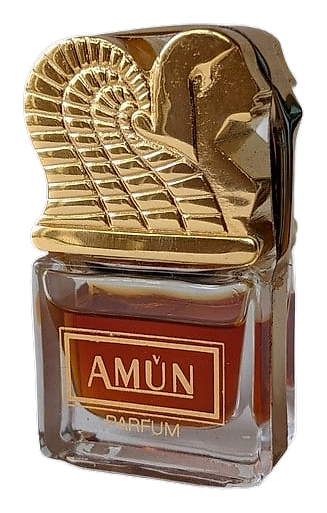
Amun takes its name from Egyptian mythology, the god who represented the hidden, the mysterious, the force behind creation itself. Muelhens, the German house best known for their ubiquitous 4711 cologne, released Amun in 1981. The choice of this ancient name carried weight, suggesting something deeper than a simple brand exercise. It implied access to forces that had shaped civilizations, inviting the wearer into a narrative far older than the modern perfumery it came from.
What makes Amun work is its structure. Aldehydes at the top give it that vintage glamour, the sharp, effervescent quality that recalls 1970s sophistication before it softens into something warmer. The heart stacks five notes that could easily overwhelm each other: clove, cinnamon, jasmine, rose, ylang-ylang. They don't compete. They layer, with the spice notes grounding the florals just enough. The base adds seven materials, amber, patchouli, sandalwood, labdanum, benzoin, tolu balsam, vanilla, a foundation built to last. This is oriental architecture. Every tier supports the next.
The evolution
The opening is aldehydic brightness. Bergamot and orange lift the aldehydes, creating that metallic-fresh quality that feels like old glamour distilled. Thirty minutes in, the spices arrive. Cloves and cinnamon push through, not delicate, present. The florals don't disappear but they become background texture, supporting rather than leading. By the third hour, the drydown takes over. Amber and vanilla wrap around patchouli and sandalwood, settling close to skin but projecting strongly in the first few hours. The sillage remains notable throughout the wear, with the warmth of the orientals emerging as the aldehydic brightness fades. On skin, the fragrance evolves continuously, revealing new dimensions as the hours pass.
Cultural impact
The comparison to Opium is inevitable. Both are aldehydic orientals from the same era, and both occupy similar space in the fragrance landscape. But Amun takes a different approach to the florals. Where Opium leaned into jasmine and orange blossom, Amun adds ylang-ylang and clove, creating something warmer and more overtly spiced. This distinction matters. The ylang-ylang adds a sweet, creamy floralcy that rounds the spice without softening it, while the clove pushes the composition toward something moreassertive. The result feels less like a direct response to Opium and more like an independent exploration of the same territory.