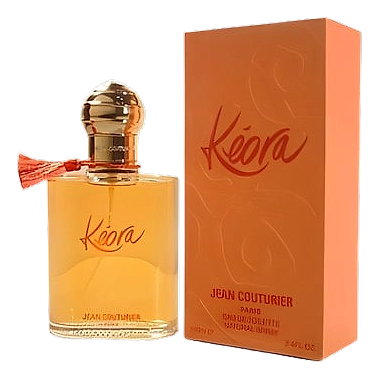

The Story
Why it exists.
The beginning
Jacqueline Couturier built Keora as an exercise in contrast. The top notes arrive bright, citrus and neroli cutting clean against the air. But the real work begins underneath. She layered vanilla against powdery iris, then anchored both with civet and ambergris, materials that give a fragrance its staying power. The name itself, Keora, suggests something exotic, a place or memory rather than a person. This was a perfumer reaching for a feeling, not just a scent. The result is unmistakably oriental: sweet, warm, and animalic all at once. It was composed to be noticed, even if it doesn't shout. The citrus sparkle gives way to reveal the iris, which arrives with a cool, powdery presence that might almost read as metallic in its precision.
The base of Keora is where Jacqueline's technical precision shows most clearly. She built it on vanilla and benzoin, materials that fix and soften, then layered in civet and ambergris, two of the most challenging animalic materials in perfumery. Done poorly, they overwhelm. Done well, they give a fragrance its pulse. The addition of Russian leather and vetiver grounds everything. These are earthy, almost mineral materials that prevent the composition from floating into abstraction. Patchouli anchors the drydown further, ensuring the fragrance settles rather than evaporates. What results is a scent that moves from powdery florals to warm vanilla to something animalic and lasting.
The evolution
The opening hits immediately. Citrus, neroli, and a rosewood warmth that suggests more depth than most bright beginnings deliver. The bergamot and mandarin play their roles, but the neroli hangs on longer, sweet and slightly indolic, refusing to be dismissed. As the top notes settle, the iris arrives. This is where Keora makes its case. Powdery, slightly metallic-woody, it wraps around the vanilla and benzoin and creates a contrast that reads as both sweet and tense. The jasmine and rose contribute a floral warmth, but it is the iris that dominates the heart. The drydown belongs to the base. Vanilla and tonka bean provide sweetness, but the civet and ambergris give it presence. The ambergris reads as warm, slightly salty, an animalic depth that prevents the sweetness from becoming confection. Patchouli and vetiver arrive last, earthy and dry, settling the fragrance into the skin.
Cultural impact
Keora has maintained a loyal following among those who appreciate vintage oriental vanillas. The combination of powdery iris, warm amber, and animalic depth gives it a distinctive character, rich, bold, and unapologetically warm. Community reception centers on its distinctive personality and reliable longevity. For wearers seeking that vintage sensibility, powdery warmth, animalic depth, lasting presence, Keora remains a compelling choice. The fragrance captures an era of perfumery when bold, unapologetic compositions ruled, and its devoted admirers appreciate how it continues to deliver that experience with consistency and integrity.