
The Story
Why it exists.
The beginning
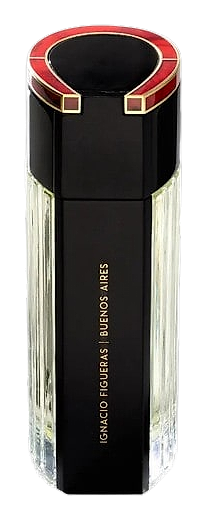
Buenos Aires is the opening note in Nacho Figueras's travel diary, the city that shaped him before polo carried him elsewhere. The Argentine fragrance line launched in 2019 with six compositions, each named for a destination tied to his career. The brand quote that anchors the collection speaks of Buenos Aires as the place where Figueras courted his wife Delfina, and where polo in turn courted him. Carlos Benaïm composed the scent, working from that emotional ground: a hometown composition that remembers where the story started. It is the fragrance that sits at the beginning of the line, the one that returns to origins before the rest of the collection walks outward.
What makes Buenos Aires distinctive in the line is the tension between Turkish rose and the sharper players stacked around it. Most rose-forward fragrances lean one of two ways: sweet and powdery, or dark and resinous. This one goes a third route. Blackcurrant bud brings a green, almost bitter snap. Ginger adds a clean burn that keeps the florals from going soft. Pink pepper sharpens further, giving the opening a nervy, restless edge that refuses to settle into any familiar rose category.
The evolution
The first ten minutes belong to blackcurrant bud and bergamot, sharp and green, with ginger flickering underneath like heat distortion off pavement. Turkish rose arrives around the twenty-minute mark, but it does not arrive alone. Bay leaf threads through it, giving the florals a herbal backbone that keeps them from tipping into sweetness. The interplay between rose and bay leaf creates the spine of the composition, a cool-warm dialogue that runs through the heart phase. As the hours pass, the rose has softened into something quieter, and the patchouli begins to surface, earthy and grounded. Vetiver joins it, adding a dry grassiness that pulls the scent further from any conventional floral. The amber in the base wraps everything in a warm haze that stays close to the body.
Cultural impact
Buenos Aires holds a distinctive position because it treats rose in an unconventional way, building the flower around sharp green and herbal accents rather than letting it dominate. The rose-ginger-patchouli combination gives the composition a tension that lifts it away from the softer rose traditions it might otherwise be grouped with. It reads as a scent shaped by movement and exposure rather than by a single tradition, the kind of fragrance worn by someone whose taste was formed across multiple places but who still calls one home.