The Story
Why it exists.
The beginning
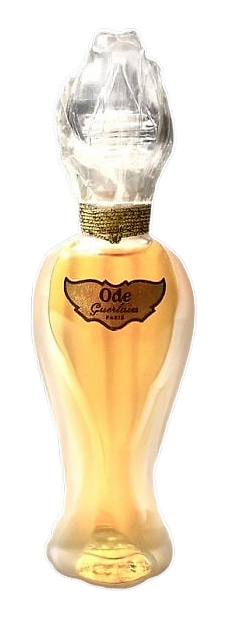
Ode was the final composition by Jacques Guerlain, launched in 1955 after a career that spanned 65 years inside the house his family built. The name carries weight. An ode is a formal address, a poem offered upward, and naming his last work that way suggests Jacques knew what he was closing out. The fragrance also marks the very first efforts of his grandson Jean-Paul Guerlain, then just 18, who would go on to define the house's later decades. So Ode sits at a hinge: one era ending, another about to begin, both signed in the same juice.
What makes Ode interesting structurally is the contrast it sets up and then refuses to resolve. Aldehydes at the opening promise a crisp, soapy, almost architectural floral, the kind of clean-shaven beauty the era loved. Then the heart swerves into something denser: iris, peach, almond, violet, all of them carrying a warmth that feels closer to skin than to air. The base of heliotrope and musk seals that softness in. It is powdery, yes, but powdery the way a confession is quiet, not powdery the way a sachet is decorative.
The evolution
The first ten minutes are almost aggressive in their brightness, aldehydes cracking open with hyacinth's green-cool snap, the whole thing smelling like cold silver and something just bitten. Then it softens. Iris arrives first, powdery and almost suede-like, followed by violet and rose, which land together like a held breath. Peach sneaks in underneath, adding a fleshy sweetness that keeps the florals from feeling austere. Jasmine threads through but never shouts, a quiet supporting presence rather than a soloist. As the composition settles, the shift from cold to warm happens without announcement; the aldehydes do not exit so much as recede, leaving behind a cooler echo that the warmer notes gradually overwrite. The almond and heliotrope step forward to give the base its almond-milk creaminess, a tenderness that settles close and lingers.
Cultural impact
Ode sits in a rare category: a fragrance that, by most accounts, appears to be discontinued, and yet still draws steady attention from those who encounter it. Its reputation rests on its construction more than any cultural moment, a powdery floral with an unusually animalic undertow that gives it a slightly knowing edge. The composition does not behave like a perfume that is trying to be decoded; it sits close, rewards repeat exposure, and reveals its layers slowly rather than all at once. Wearers tend to describe it less as a scent they apply and more as a posture they adopt: reserved, slightly knowing, not interested in being decoded.