
The Story
Why it exists.
The beginning
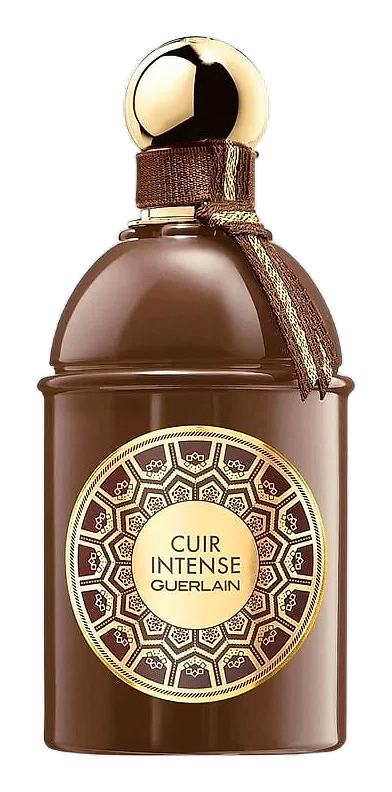
Cuir Intense arrives as part of the Absolus Allegoria collection. Thierry Wasser designed this fragrance with leather at its core, treating it as something with complexity and dimension rather than a single characteristic. Osmanthus and ylang-ylang arrive as counterweights, their sweetness pulling against the grain of what leather is supposed to smell like. The apricot-like sweetness of osmanthus blends with ylang-ylang's creamy floral undertones, creating an unexpected counterpoint to leather's darker character. Cedar, sandalwood, and tobacco then underline the darker register, adding depth and warmth. The result is a fragrance that refuses easy categorization: too warm for someone expecting cold leather, too bold for someone expecting sweetness.
The osmanthus-leather pairing defines the fragrance's structure. Osmanthus typically signals softness, osmanthus associations with autumn sweetness, apricot jamminess that reads as delicate. Leather signals the opposite: animalic, tactile, worn. Putting them in the same pyramid creates creative tension between contrasting elements. The ylang-ylang amplifies the floral with its narcotic creaminess, pushing the opening further away from expectation. What follows is leather that has been allowed to be fully itself: smoky, slightly animalic, uncompromising. The tobacco doesn't sweeten it.
The evolution
The osmanthus arrives first, and it announces itself clearly. Apricot-sweet, almost jamminess without the jam. Ylang-ylang adds a creamy undercurrent that makes the top feel plush, almost edible. For the first portion of wear, Cuir Intense reads almost floral. Then the leather takes over and everything shifts. The transition feels like moving into a different register. The leather here is real, not suede, not faux leather, but the actual smell of hide under heat. Musk amplifies its animalic dimension. Cedar and sandalwood provide structure, but the leather is doing the talking. As time passes, the florals retreat and the leather dominates, backed by wood. The drydown arrives with sandalwood creaminess meeting tobacco warmth, cedar providing a smoky finish that lingers. On most skin types, the fragrance proves long-lasting.
Cultural impact
Cuir Intense generates strong reactions in the way that confident fragrances often do. Those who connect with it tend to connect deeply, praising its sophisticated leather character and its ability to hold presence in a room without overwhelming it. The fragrance's weight and animalic character appeal to those seeking leather in its most authentic form. Its refusal to accommodate creates a clear division between those who appreciate its uncompromising nature and those who find its intensity challenging. Even among critics, the fragrance is recognized as leather that knows what it is. It arrives fully itself and waits to see who shows up.
The House
GuerlainGuerlain stands as one of the oldest and most revered perfume houses in the world, founded in Paris in 1828 by Pierre-François-Pascal Guerlain. What began as a boutique on rue de Rivoli quickly became the preferred destination for Parisian society, attracting dandies and elegant women who sought custom-crafted fragrances. The house's influence grew to such heights that Guerlain earned the title of Official Perfumer to Napoleon III after presenting Eau de Cologne Impériale to Empress Eugénie as a wedding gift in 1853. This royal patronage marked the beginning of Guerlain's enduring association with European aristocracy, as the house went on to create fragrances for Queen Victoria and Queen Isabella II of Spain. Today, under the creative direction of Thierry Wasser, the fifth-generation perfumer, Guerlain continues to shape the landscape of fine fragrance with a portfolio spanning over 1,100 olfactory creations. The house remains headquartered at its legendary Champs-Élysées mansion, a historic monument that anchors Guerlain's position at the intersection of heritage and contemporary luxury.
The Creator
Thierry WasserWasser gravitates toward green, crispy notes and the bold florals Guerlain is known for. Bulgarian rose appears repeatedly in his work, and he travels annually to oversee the harvest in Kazanlak.