The Story
Why it exists.
The beginning
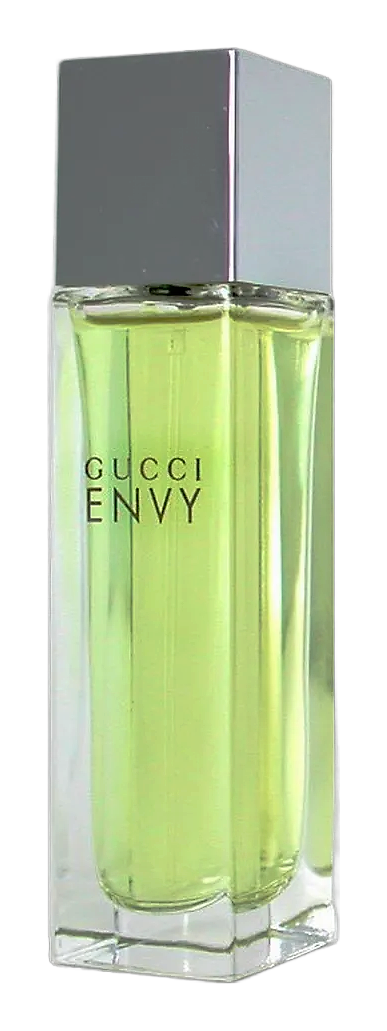
Gucci entered perfumery in 1974, building on an identity forged in Florentine leather craft. By the time Maurice Roucel composed Envy in 1997, the House had spent decades treating fragrance as an extension of provocation rather than a polite accessory. Roucel worked from a single directive: make another woman stop mid-sentence. The name preceded the formula, functioning not as metaphor but as mandate. Envy was designed to be coveted, not complimented, and Roucel built the structure to ensure the wearer understood that ambition from the first spray. Bergamot and pineapple opened the composition as a deliberate calculated jolt, while magnolia and freesia provided the floral cover that made the citrus feel elegant rather than aggressive. Oakmoss in the drydown anchored the whole exercise in chypre tradition, a House signature move dressed in modern excess.
Roucel's philosophy with Envy centered on creating a fragrance that functions as a statement object, much like a Gucci bag in the room. The green florality was never meant to be decorative; it was meant to be structural. The pineapple opening serves a specific purpose: it interrupts attention. Freesia and magnolia then reframe that interruption as intentional elegance, preventing the opening from feeling like aggression. The heart of jasmine and rose is deliberately opulent, designed to feel like wealth displayed rather than wealth concealed.
The evolution
The fragrance opens with pineapple and bergamot cutting through the air with sharp, immediate presence. Freesia and magnolia temper the citrus without softening it entirely, and peach adds a fleeting sweetness that vanishes before the heart fully arrives. Within twenty minutes, lily of the valley and hyacinth emerge as the green floral backbone, supported by jasmine and rose building an opulent white floral core. Violet introduces its powdery presence as the heart matures, giving the floral composition a soft, almost nostalgic quality. By the third hour, cedarwood and sandalwood dominate, with oakmoss providing the earthy chypre foundation that holds the entire structure. Iris and musk linger as the final act, creating a powdery skin-close finish that extends the drydown for hours after the initial spray.
Cultural impact
Envy became a landmark of 90s green-floral perfumery, a cool, modern counterpoint to the heavierorientals dominating the decade's mainstream. The metal-floral accord signaled that minimalism could be just as striking as excess. It developed a loyal following among wearers who wanted presence without projection, and remains sought after even in discontinued form.