
The Story
Why it exists.
The beginning
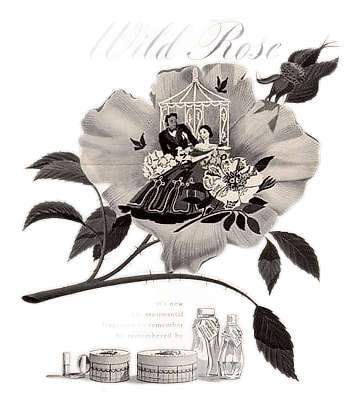
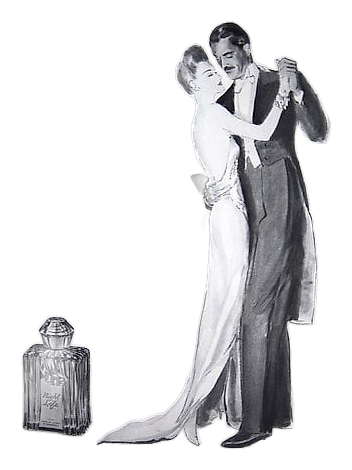
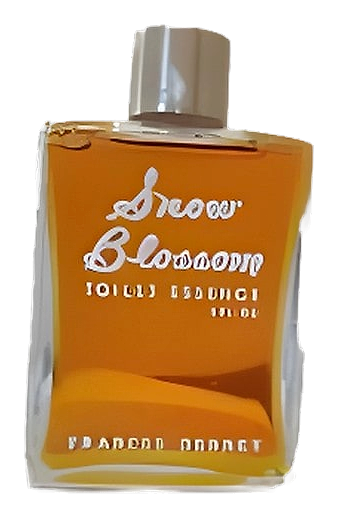
Snow Blossom arrived in 1950 from Frances Denney, a house that had been steadily releasing scents through the late 1930s and into the 1940s. By the time Snow Blossom reached the counter, the brand had already established its register with releases like You and I and Wild Rose, scents that leaned toward nature and emotion rather than ornate European flourishes. Snow Blossom fits that lineage perfectly. The name reads as a single image: a flower dusted in cold, something blooming despite the season. It was composed for a woman who didn't need to announce herself, whose beauty felt inherited rather than performed. The early postwar years in America had their own climate of taste, and powder, softness, and restraint read as quiet confidence.
What makes the composition interesting is its willingness to sit in the cold. Snow Blossom stays close to skin, keeps its projection modest, and treats the floral heart as the main event rather than a passage to something heavier. That's a deliberate choice, and one that gives it a distinctive place in the period's fragrance conversation. The structure is uncomplicated on purpose. Nothing here is trying to prove anything. The restraint feels less like an absence than a philosophy, the perfumer's hand visible precisely because it refuses to show off.
The evolution
The opening is the brightest the scent will ever be. A cool, clean lift that hovers rather than blooms, crisp and still, the olfactory equivalent of a held breath. It reads as cold air made tactile, something you can almost see settling on the skin. Then the floral heart arrives, and the temperature drops another degree. Powder, soft white petals, the kind of cool that feels like January light through curtains rather than spring growth. There is no rush toward sweetness. The floral accord stays disciplined, keeping its character even as it softens. As the hours pass, the drydown settles into a skin-close softness: a quiet warmth underneath the powder, the merest suggestion of depth waiting at the base. It doesn't project much by then. You have to lean in.
Cultural impact
Snow Blossom arrived in 1950 and quickly found a place in the wardrobes and dressing tables of women who favored restraint over opulence. Frances Denney positioned the fragrance as a refined option for those who preferred their florals cool and their powder clean, and it became a quiet fixture of mid-century boudoirs and dressers. The scent's limited production kept it from the kind of mainstream fame that louder releases of the era enjoyed, and that very restraint sharpened its appeal among those who sought out the more composed corners of the period's fragrance market.