The Story
Why it exists.
The beginning
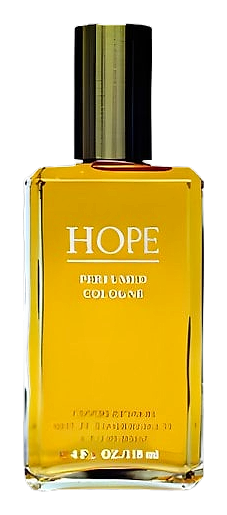
Hope arrived in 1952 from Frances Denney, a women's fragrance whose name carries an obvious weight, but whose composition reads less like optimism-as-promise and more like the memory of a morning that actually delivered. The bottle carried a quiet confidence, the kind of release that didn't need to announce itself because the juice inside already spoke clearly. Hope was an early statement of an approach that treated scent as a way to capture a feeling rather than a product launched into a catalogue. Built around aldehydes, bergamot, peach, lemon, and geranium at the top, the fragrance set a tone that suggested gardens rather than orchards, something cultivated and slightly wild.
What makes Hope interesting on paper is the way the opening plays with brightness and softness in equal measure. Aldehydes lift everything above the skin, creating that sparkling, almost effervescent quality before anything floral has settled, while peach and lemon round out the citrus with a gentle, almost dewy sweetness. Bergamot adds a clean, slightly bitter edge that keeps the opening from drifting into pure fruitiness. The heart keeps jasmine and Bulgarian rose company with Algerian geranium and allspice berries, notes that walk a line between floral and warm-spiced.
The evolution
The opening is the loudest Hope gets, aldehydes and bergamot pushing forward bright and sparkling within the first ten minutes. There's a clarity here that catches people off guard, that classic mid-century aldehyde lift before anything floral has settled. By the 30-minute mark, the heart starts to take over. The fruit of peach and lemon recedes, but it doesn't vanish entirely, and that interplay between citrus brightness and white floral gives the heart a distinctive character. Jasmine and Bulgarian rose come forward, creamy and warm, while Algerian geranium threads through with a green, slightly rose-like quality that keeps the florals from going powdery. Allspice berries add a warm, peppery edge, never dominant, just enough to give the heart a bit of dimension.
Cultural impact
Hope belongs to a particular moment in mid-century American perfumery, when houses outside the major French firms were building their own reputations on compositions that translated European perfumery conventions into something more accessible. The fragrance's willingness to lead with aldehydes and bright citrus rather than a heavier floral or oriental base places it within a lineage of women's fragrances from the early 1950s that valued lift and clarity. The jasmine-Bulgarian rose-Algerian geranium heart is a classic mid-century structure, the kind of floral triangle that perfumers returned to again and again because it simply worked.