The Story
Why it exists.
The beginning
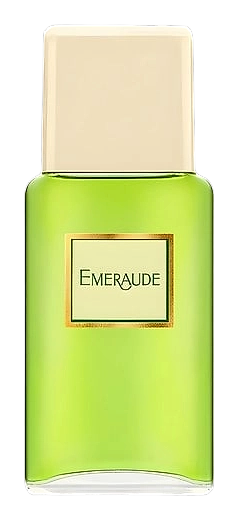
François Coty created Emeraude in 1921. The fragrance opens bright with citrus and settles into something deeper, warmer, and far more personal. Bergamot and orange arrive first, clean and direct. Jasmine and rose follow, not to dominate but to complicate. The real statement, though, arrives in the base: opoponax, benzoin, vanilla, and sandalwood wrapping the skin in powder-warm amber that lingers for hours. The citrus layer brings a crisp, almost sparkling quality that gives way as the florals unfold, their petals softening the edges without ever becoming heavy. There is a certain restraint in how the heart notes arrive, each one taking its place without rush. The amber depth that follows feels almost inevitable, as if the fragrance has been building toward this warmth all along.
What makes Emeraude's structure interesting is the amber foundation running through every phase. The fragrance doesn't shift from one character to another, it reveals. That powder-warm amber is present from the first spray, underneath the citrus brightness, growing more pronounced as the florals settle. Opoponax and benzoin are the bridge: balsamic, slightly sweet, resinous in a way that reads as warmth rather than heaviness. Vanilla extends that warmth, giving the drydown its characteristic softness. The combination creates an oriental that feels unified rather than phased, each stage an evolution of what came before, not a replacement.
The evolution
The opening is all citrus, bergamot, orange, a flash of brightness that cuts through everything else in the room. Then the florals arrive. Rosewood and ylang-ylang, jasmine holding its weight, rose adding a softness that tempers the citrus sharpness. The hand-off happens gradually, not as a switch but as a fade. The citrus retreats while the amber begins to assert itself. Rosewood brings a slightly spicy, floral woodiness that bridges the top notes smoothly into the middle, while ylang-ylang adds a creamy, tropical sweetness that pairs well with the jasmine. The jasmine itself is rich and indolic without being too animalic, grounding the lighter notes above. As the florals begin to soften, the base notes emerge more prominently, opoponax, benzoin, vanilla, sandalwood, patchouli. The drydown is where this fragrance earns its reputation.
Cultural impact
The amber oriental classification set the template for an entire fragrance family. Warmth, powder, balsamic sweetness, these accords became shorthand for a certain kind of elegance. Its consistency over time is notable: not a fragrance that drifts into irrelevance but one that holds its ground as a reference point. The composition brings together warm, powdery notes with balsamic sweetness in a way that speaks to a certain kind of elegance. Emeraude holds together remarkably well, its accords reinforcing each other from the first spray through the final drydown.