
The Story
Why it exists.
The beginning
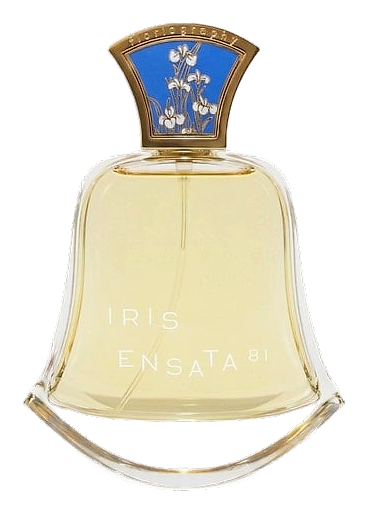
No. 18 Iris Ensata enters Floriography's numbered catalogue as a meditation on iris ensata, the species whose name the composition takes as its own. Jo Shaw built this piece for the 2026 Flow Collection, a grouping where each fragrance circles a single botanical subject rather than chasing a conventional genre. The fragrance is conceived around the flower itself: not as decoration, not as a token of sweetness, but as the dominant voice in a deliberately spare arrangement of materials. Iris ensata is a less common reference in modern perfumery, partly because the flower itself resists easy translation into bottle form.
The composition takes an unusual approach to iris. Galbanum and violet leaf arrive ahead of the flower, which is a counterintuitive order of entry, since both can easily overwhelm a delicate floral. Here they sharpen it. The galbanum gives the opening a raw green snap, almost like crushed stems, while violet leaf adds a watery, slightly bitter edge that reads as cold water before the iris material settles in. That pairing clears the air for what comes next: a dose of iris and orris that feels mineral rather than powdery, more root than petal.
The evolution
The first fifteen minutes belong to galbanum and pink pepper. There's a green bite here that's almost vegetal, a raw, slightly bitter snap like a stem broken between fingers, with a faint peppery heat underneath that never fully declares itself. It feels outdoor-cold, a temperature rather than a place. By the thirty-minute mark, that green thins and the irises arrive, not as a single flower but as two textures at once. The orris brings a powdery, almost root-like depth, the kind of iris that feels mined rather than picked, while violet leaf adds a watery, silvery shimmer that makes the whole accord feel suspended in liquid. As the hours pass, the flowers don't bloom louder. They get quieter, more focused, slightly cold in a way that recalls still water rather than a vase.
Cultural impact
Iris Ensata takes its place in a perfumery conversation about how to handle a flower that most houses treat as decoration. The composition treats iris as atmosphere instead, building the entire arrangement around its cooler and more mineral tendencies rather than its sweeter ones. The same restraint shows up in choices like overdosing on iris and violet, a deliberate wager on texture over approachability. Galbanum and ink keep the whole thing from tilting into the soft, cushioned register that many floral fragrances settle into, and the numbered catalogue format sets each release apart as a single studied page rather than a seasonal pitch.