The Story
Why it exists.
The beginning
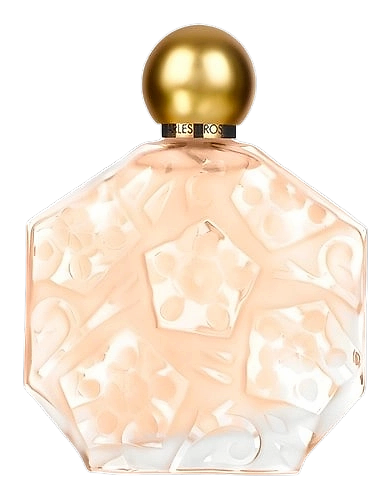
In 1981, when Françoise Caron composed Ombre Rose for Jean-Charles Brosseau, she wasn't designing a fragrance so much as capturing a color. Ombre means shadow in French, and the name itself, Ombre Rose, suggests a rose half-hidden, seen through net curtains at golden hour. Brosseau, a Left Bank milliner who had built his fashion house around the architecture of hats and the poetry of accessories, wanted something that worked the way the best jewelry does: close to the skin, personal, impossible to forget once you've encountered it. Caron delivered. The composition centers on the tension between powdery iris and a barely-there rose, wrapped in warm Brazilian rosewood and finished with a honeyed sweetness that never spills over into sweetness overload. What emerged was not a statement fragrance but a question, one asked softly, in French, at the end of a conversation you're not quite ready to end.
The note architecture follows the logic of restraint. Where many fragrances of the era built outward, Caron built inward. Brazilian rosewood opens the composition with a warm, woody brightness that could read as masculine in other hands, but here it serves as a bridge between the top accord and the powdery heart. Ylang-ylang adds a tropical creaminess that prevents the whole thing from tipping into austerity. The real signature, though, is the iris-coumarin combination in the base, a classic perfumery pairing that evokes vintage makeup compacts, face powder, the smell of a grandmother's vanity in the best possible way.
The evolution
The opening announces itself with aldehydic brightness, a shimmer, not a burst. Within minutes, Brazilian rosewood and ylang-ylang settle into something warmer, the honey becoming more apparent as the initial sparkle softens. This is a fragrance that refuses to rush its own reveal. By the time you reach the heart, forty minutes in, the rose has emerged fully, but it's a rose that has learned to whisper. Iris and lily of the valley hold the center stage for the next several hours, that's where the signature lives, in that powdery floral warmth that sits just above the skin. The drydown is where patience pays off. Musk and sandalwood arrive quietly, vanilla creeping in at the edges, and the coumarin lingers longest of all, that hay-like, tonka warmth that stays on clothing and skin for hours after the rest has faded. A full workday, most wearers report. On fabric, it can stretch into the next morning.
Cultural impact
Ombre Rose occupies a particular place in the fragrance world, not a best-seller or a status symbol, but something rarer: a quiet reputation. Worn by those who discovered it decades ago and never stopped, recommended by stylists who consider it a secret. It sits comfortably alongside powders and lipsticks, with a vintage character that younger wearers often describe as unexpected, they expected something dated and found something timeless instead.