The Story
Why it exists.
The beginning
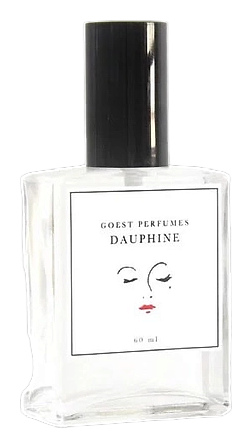
Goest entered the niche scene in 2014 with a coordinated launch of seven fragrances, each bearing a conceptual title. Among them, Dauphine was entrusted to Jacqueline Ella Steele, whose reputation for sweet-powdery blends suited the house is quietly ambitious ethos. The perfume is name evokes the elegance of a French duchess, and the brief called for something soft, Intimate, and understated. Steele worked with the full palette of almond, rose, musk, and whipped cream to create a composition that honored the name is refinement without veering into formality.
The note palette for Dauphine is concise but purposeful. Almond provides the distinctive character, a bitter-sweet kernel that sets the fragrance apart. Rose bridges the gap between almond and whipped cream, adding floralcy that keeps the composition from reading as purely edible. Musk offers skin-like warmth and longevity without dominating. Whipped cream brings a lactonic softness that rounds the edges and makes the composition feel approachable. The philosophy here is restraint: let each note speak clearly without crowding the composition.
The evolution
Dauphine opens immediately, with no distinct top phase to build anticipation. The almond arrives first, bringing its characteristic bitter-sweetness that immediately differentiates the scent from sweeter florals. Rose follows quickly, lending a delicate floralcy that tempers the almond without overwhelming it. Whipped cream introduces a soft, lactonic quality, and musk keeps everything close and Intimate. Over the first hour, the rose deepens slightly while the almond grows creamier, creating a blend that evolves gently within its own heart. By the third hour, the drydown softens into a quieter echo of the heart, with rose and musk persisting while almond fades and whipped cream lends a final, fading sweetness. The fragrance settles into a powdery musk with a whisper of rose, Intimate and unobtrusive as it slowly dissipates over three to four hours.
Cultural impact
Since its 2014 debut, Dauphine has quietly influenced the niche perfume scene by championing a restrained sweet‑powdery aesthetic that avoids overt gourmand excess. Its almond‑rose‑cream blend resonated with consumers seeking understated elegance, prompting several boutique houses to explore similar almond‑centric compositions. The fragrance’s subtle projection and balanced dry‑down have made it a reference point in discussions about modern minimalist perfumery, encouraging a shift toward nuanced, comfort‑driven scents that prioritize skin chemistry over theatrical flair. Over the years, Dauphine has been cited in editorial pieces as a benchmark for refined gourmand without cloying sweetness, cementing its role as a quiet cultural touchstone among connoisseurs.