The Story
Why it exists.
The beginning
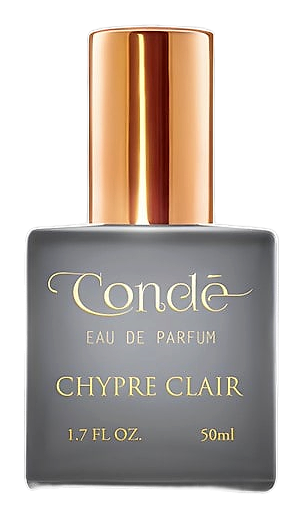
Fábio Condé released Chypre Clair in 2017 as part of his work with Condé Parfum. The concept was direct. Take the chypre structure, oakmoss, vetiver, that mossy-green architecture classic perfumery had been leaning on, and rewire it with citrus and aquatic florals so it could breathe in tropical weather without losing its bones. The brand's own framing calls it "a fresh scent with an almost golden chypre," one of perfumery's most important olfactory families, rebuilt for warmth. A modern chypre, in other words, made by someone who knew exactly which rules to keep and which to leave at the door. The citrus opens bright and almost candied from the bergamot, Sicilian lemon, and Palestinian sweet lime, while the petitgrain adds a bitter, leafy snap that keeps the sweetness honest.
What's interesting is what Condé left out of the oakmoss conversation. Traditional chypres lean on a dense patchouli combination that can read thick in warm weather. Chypre Clair keeps the oakmoss but surrounds it with petitgrain, bergamot, Palestinian sweet lime, and Sicilian lemon at the top, then threads green tea and bamboo through the middle. The result is a chypre stripped of its weight. Same family, different metabolism. The vetiver at the base still gives it that earthy, root-down quality, but everything above it is built to evaporate cleanly.
The evolution
The first ten minutes are all citrus, bright and slightly bitter from the petitgrain, with the sweet lime doing something softer underneath. Then around the thirty-minute mark, the green tea and bamboo arrive and the whole composition goes quiet, like a room after the conversation pauses. By hour two, the oakmoss has taken over. It doesn't shout. It just grounds everything in that dry, forest-floor register that chypre lives and dies by. Vetiver threads through it like a wire, adding a cool mineral edge that keeps the moss from turning heavy. As the hours pass, the oakmoss gradually recedes and you're left with a soft vetiver-and-tea trace. The drydown is where the fragrance shows its quieter side. The green elements fade first, leaving the vetiver and the faintest echo of oakmoss, almost like damp bark drying in the sun.
Cultural impact
Chypre Clair wears its structure lightly. It tends to attract wearers who want something green and mossy without the weight, and anyone dressing for warm weather who still wants a scent with backbone. The fragrance positions itself as a study in contrasts, taking the mossy, forest-floor depth of classical chypre and pairing it with the clean, sun-reflective quality of citrus and aquatic florals. The green tea and bamboo in the middle notes give it a transparency that most chypres don't offer, almost like looking through tinted glass at something dense behind it. What makes the composition stand out is the way it handles transition.