The Story
Why it exists.
The beginning
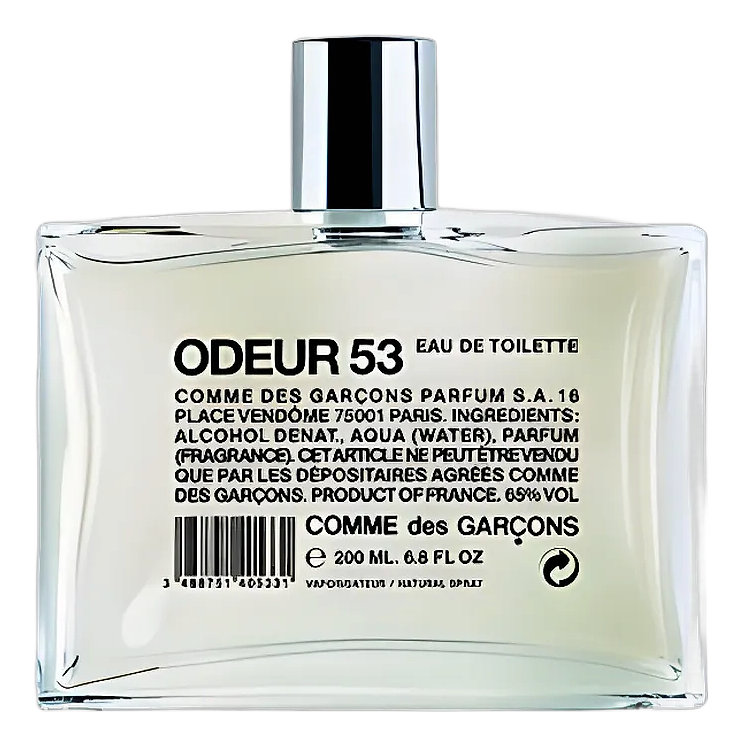
Odeur 53 arrived in 1998 as a fragrance that questioned what perfume could be. Comme des Garçons refused the conventions of perfumery, rejecting the idea that a fragrance must follow prescribed structures or tell a linear story. Instead, the brief was radical: fifty-three ingredients, each representing a raw material stripped of conventional use. Anne-Sophie Chapuis and Martine Pallix served as perfumers for this exercise in reduction and concept, building a scent that reads more as installation piece than commercial fragrance.
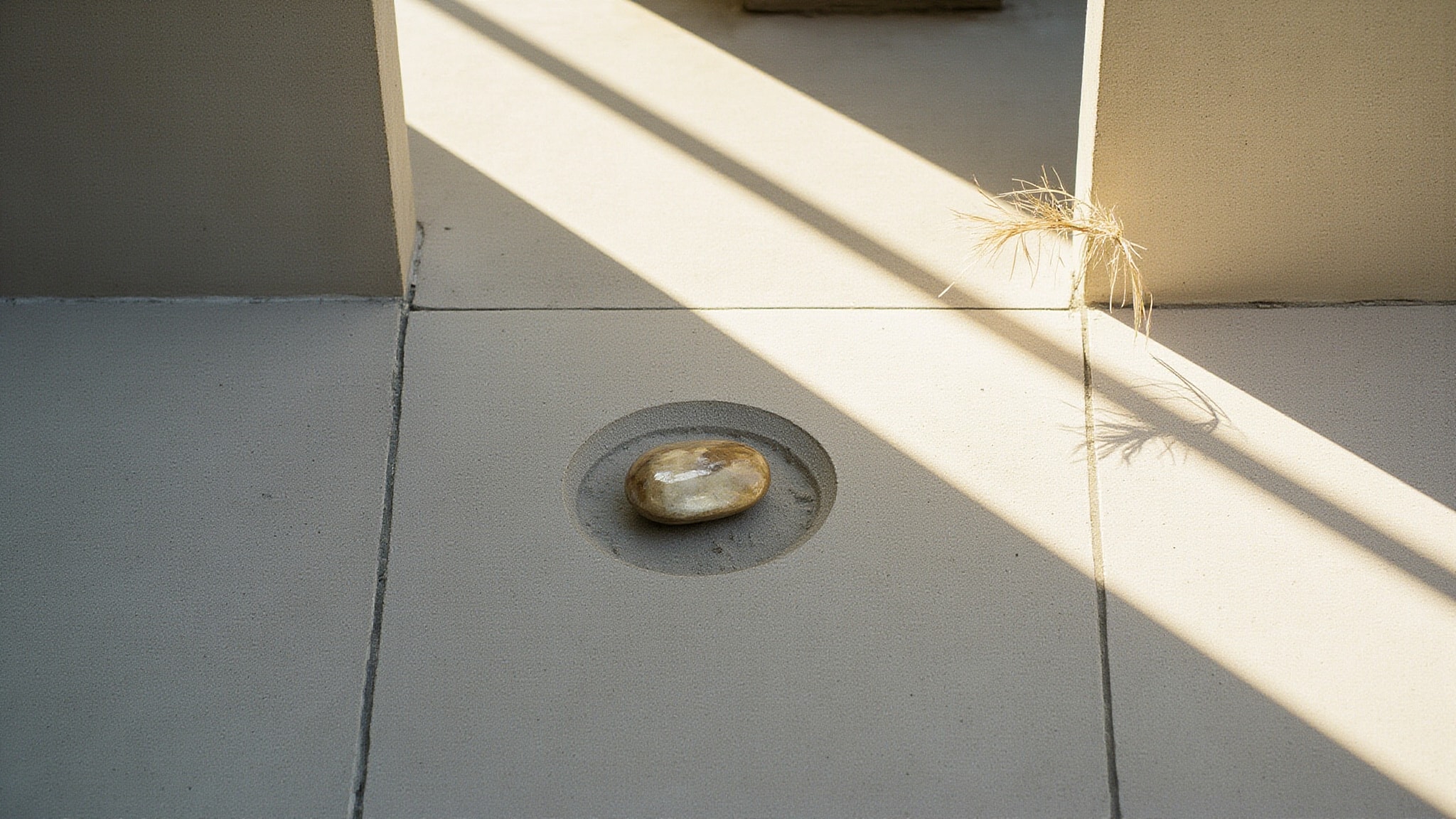
The note philosophy behind Odeur 53 treats its ingredients as raw materials to be experienced, not blended into something more palatable. Air Accord and Grass in the opening create an unusual freshness that is less citrus and more environmental. Metallic Notes paired with Clay and Pebbles form a mineral landscape that most perfumers would use as background detail. Sand completes the effect by adding texture without sweetness. Together, these notes function as a conceptual argument. They resist the idea that perfume must smell like flowers, fruit, or wood. Instead, Odeur 53 asks you to consider whether air, earth, and metal constitute a fragrance on their own terms.
The evolution
The opening sets up the sillage phase, then the heart takes over for the majority of the scent experience before the drydown settles back to skin level. Odeur 53 operates in complete opposition to conventional projection. It does not throw itself into a room. Instead, it exists at skin level, barely perceptible until someone draws close. Sillage remains intimate throughout, creating a private experience rather than a public one. The mineral and sand notes linger, but they do not announce themselves loudly. Odeur 53 is best understood as a fragrance you wear for yourself rather than for others, an act of private conceptual engagement with the materials of smell.
Cultural impact
Odeur 53 arrived in 1998 as a fragrance that operated differently from its contemporaries. The name was transparent about its structure: fifty-three notes, all equally present, none subordinate to another. This structural approach itself was the statement. The composition offered something unfamiliar, built from ingredients that don't typically appear in perfumery: sand, metal, flame, air, the smell of rubber, oxygen. Each material would coexist with the others rather than building toward a predetermined conclusion.










![Oxygen [8o] by One of Those](https://pkjcevljwhrjwpswgpkp.supabase.co/storage/v1/object/public/fragrance-images/bottles/one-of-those/oxygen-8o.png)