The Story
Why it exists.
The beginning
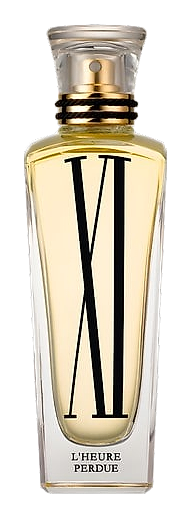
L'Heure Perdue means the lost hour, that liminal stretch between moments, the one that slips away unnoticed. Mathilde Laurent conceived it as the eleventh entry in Cartier's Les Heures de Parfum collection, a series that treats each fragrance as a chapter in an ongoing conversation about time, desire, and what we wear close to the skin. The brief was simple on paper: create something sweet, something gourmand, something with animalic depth. But Laurent being Laurent, the execution became something stranger, a fragrance that smells like a memory of a party, not the party itself.
The choice to build it entirely from synthetic materials is the structural decision that makes everything else work. Without naturals, there's no variability, no batch differences, no botanical truth to protect. The sweetness of vanillin doesn't compete with bergamot or rose, it simply is, layered over synthetic musks that behave like skin memory. Muscenone becomes the animalic not because it mimics castoreum or civet, but because it smells like the knowledge a body carries. This is perfume as controlled illusion, and the synthetic constraint is what gives it that eerie, liminal quality reviewers keep returning to.
The evolution
It opens sweet and stays sweet, that's the first thing to understand. Vanillin announces itself without apology, a sugar-cloud sweetness that reads as frosting, caramel, the warmth of something dissolving on warm skin. There's no sharp citrus opening to negotiate, no green top note to wait out. The sweetness is immediate and it lingers. The second thing to understand: the animalic doesn't fight the sweetness. It lives underneath, in the mid-register, where muscenone and its synthetic cousins create an intimate musk that smells like skin that's been wearing something for hours. Not dirty. Not raw. Just present. The handoff between sweet and animalic is seamless, you stop noticing where one ends and the other begins. The drydown is where it earns its longevity score. Eight to ten hours on most skin types, sometimes more on fabric. The sweetness never fully disappears but it changes register, settling from frosting into something warmer, closer, more like the memory of warmth than warmth itself.
Cultural impact
The entirely synthetic composition caught attention when it launched in 2015, a time when naturals still dominated the luxury fragrance conversation. Laurent's choice to build L'Heure Perdue from synthetic materials only wasn't a cost-cutting measure; it was a statement about intention and control. Wearers describe it as the scent of a room after the party ends, or a playground with no children, or the sweetness of something that exists in memory rather than reality. That eeriness is deliberate. It's why people keep coming back to it, even when they can't explain why.