The Story
Why it exists.
The beginning
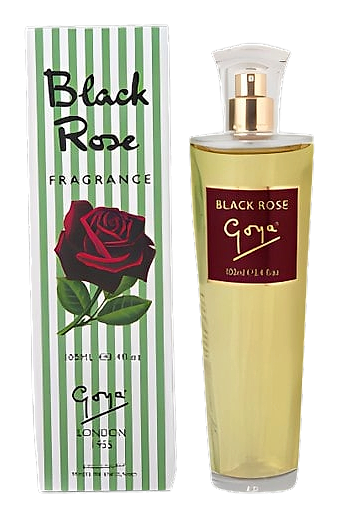
Goya Black Rose was originally launched by the founder of Goya, Douglas Collins, back in the 1950s, a floral composition rooted in mid-century romanticism. Decades later, the original formula resurfaced at the Amersham Museum, and Beauty Brand Development, in consultation with Christopher Collins (son of founder Douglas Collins and heir to the Goya brand), worked with the suppliers of those original oils to bring it back. The 2014 re-launch is not a reinvention. It is a careful resurrection of a formula thought lost to time.
What makes Goya Black Rose structurally interesting is its insistence on rose without apology. Bergamot and green notes lift the top into something almost sharp, while clove adds a warm-spiced friction that prevents the florals from ever drifting into powder. Damask rose and geranium anchor the heart in dual territory: the first lush and honeyed, the second leafy and slightly bitter. The drydown of jasmine, musk, and amyl salicylate settles into a lingering warmth that rounds out the composition, giving the rose room to deepen rather than flatten.
The evolution
The first ten minutes are almost aggressive in their freshness. Bergamot and green notes cut through with a cold, leafy snap, and the clove sits underneath like a hand warming itself near a fire. This isn't the polite floral opening of most modern rose fragrances. It has bite. By the thirty-minute mark, the green recedes and Damask rose steps forward, full-bodied and dense, with geranium threading a herbaceous edge through the petals. The composition settles into something that reads as one unified floral statement rather than a layered construction. Two hours in, the rose is still dominant but the base begins to assert itself. Jasmine arrives soft, almost indolic in warmth, and the amyl salicylate introduces a sweet, sunlit quality that gives the drydown its vintage character. Musk rounds the edges without softening the whole composition into anonymity. Six hours later, what remains is a warm, slightly sweet rose skin scent that clings close and intimate. It does not project by then. It has become part of whoever wore it, and that's the point.
Cultural impact
Goya Black Rose exists in an unusual space: a mid-century formula, lost to time, recovered from a museum archive, and faithfully reissued for a modern audience that never smelled the original. It sits in a category of its own, a rose composition that takes the flower seriously as the central character rather than a supporting note in a broader accord. The fragrance leans into density and warmth, building around the rose with clove, geranium, and a musky base that gives it presence and staying power. It carries the weight of a vintage construction: rich, layered, and unapologetic in its romanticism.