
The Story
Why it exists.
The beginning
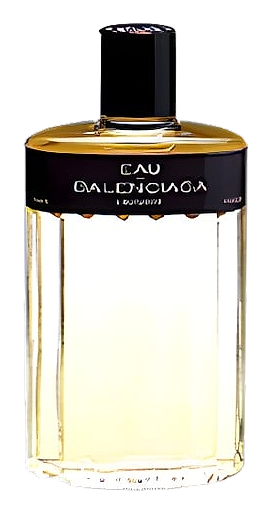
In 1973, Balenciaga introduced Eau de Balenciaga Lavande to its fragrance line. The house had already entered perfumery decades earlier with Le Dix in 1947, and by the early seventies the label had accumulated a body of work that included both heavier compositions and lighter ones. Eau de Balenciaga Lavande falls into the latter camp: a straightforward men's cologne built around one of perfumery's oldest and most disciplined ingredients, treated with a discipline that lets the lavender speak clearly rather than getting lost in ornament. It's a fragrance that rewards attention to what lavender actually smells like when it's allowed to lead, rather than serving as a supporting note in something louder or more decorated.
Balancing lavender without letting it dominate takes care. Here, it shares the top with bergamot, petitgrain, and Amalfi lemon, ingredients that push in different directions: one bright and citric, one bitter and green, one sharp and pithy. The heart layers carnation's clove-like warmth against geranium's rosy greenness, two florals that flank the herbal core with contrasting textures. Sandalwood and cedar provide a woody foundation that keeps the whole composition from feeling airborne, grounding the lavender in something warmer and more substantial as the hours pass.
The evolution
A quiet lavender opens with bergamot and petitgrain, the petitgrain adding a green herbal edge that keeps the opening from feeling soapy or synthetic. The Amalfi lemon brightens the top before fading relatively early, letting the lavender settle into a soft herbal core that lasts through the heart. As the hours pass, the lavender deepens into a muted, slightly woody drydown with a faint musky warmth, the kind of evolution that rewards patience over immediate impact.
Cultural impact
Eau de Balenciaga Lavande sits as a distinctive entry in the lavender cologne category, the kind of scent that rewards people who already know what real lavender can do when it's given room to perform. Its production was apparently discontinued, which gives it the quiet appeal of something no longer being made: harder to find, easier to appreciate once you do. Wearers tend to be fragrance-experienced, often returning to it after years of wearing more current releases, drawn back by a construction that values clarity and restraint over trend-driven decoration.