
The Story
Why it exists.
The beginning
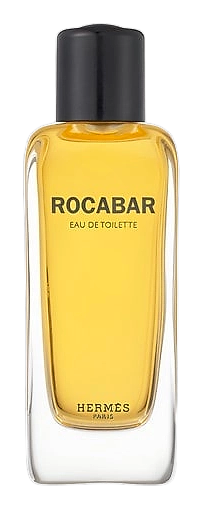
Rocabar's name is a contraction of two words: rug, and à barres, striped in French. It refers to the traditional horse blankets Hermès crafted in its saddlery workshops, those saffron-colored, red and blue striped covers draped over the flanks of champion horses. The fragrance, signed by Gilles Romey in 1998, translates that equestrian heritage into liquid form. Three perfumers collaborated on the composition: Romey, Jean-Claude Ellena, and Bernard Bourgeois. The brief, it seems, was to bottle the feeling of those blankets, the weight of wool, the warmth of aged leather, the quiet authority of a well-turned-out horse. What emerged wasn't a scent about horses. It was a scent about what covers them.
The heart of Rocabar lives in its woods, not just cedar and cypress, but the balsam fir of Canada and the dry oakmoss beneath forest floors. These are materials with weight. Cardamom and carnation add a spice that lifts the composition rather than heating it, keeping the entire structure cool and composed. Benzoin and vanilla at the base bring warmth without sweetness, a resinous amber that reads more like aged leather than dessert. The structure is unusual: most fragrances build from brightness down to depth. Rocabar keeps the cool woody character throughout, never fully surrendering to warmth. That's the equestrian logic, the blanket stays a blanket, even when it's warm inside.
The evolution
The first ten minutes announce themselves clearly: citrus, juniper, a clean herbal snap that feels like walking into a saddlery in early morning. Cedar arrives fast, pushing the brightness toward green without going sharp. By the half-hour mark, the juniper fades and the cypress takes over, that coniferous, slightly medicinal quality that makes this read as distinctly masculine. The heart holds for two to three hours: cedar and cardamom together, a warm spice that never quite becomes sweet. The carnation and violet add a quiet floral undertone, barely there, just enough to keep the wood from going austere. The drydown is where Rocabar earns its reputation. Benzoin and vanilla emerge slowly, blending with the oakmoss and patchouli to create a warm, resinous base that persists for hours. On skin, expect six to eight hours of presence, intimate sillage, but undeniable to anyone who gets close.
Cultural impact
Rocabar occupies a particular space in the Hermès fragrance wardrobe, not the minimalist precision of Ellena's later work, but something with more texture and warmth. Released in 1998 alongside the house's broader push into masculine scent, it has maintained a quiet reputation among those who appreciate the equestrian heritage. Wearers describe it as the fragrance of someone who walks into a room and doesn't need to announce themselves, old money, in the contemporary phrase. It's never been a blockbuster, but it has never gone away either.