
The Story
Why it exists.
The beginning
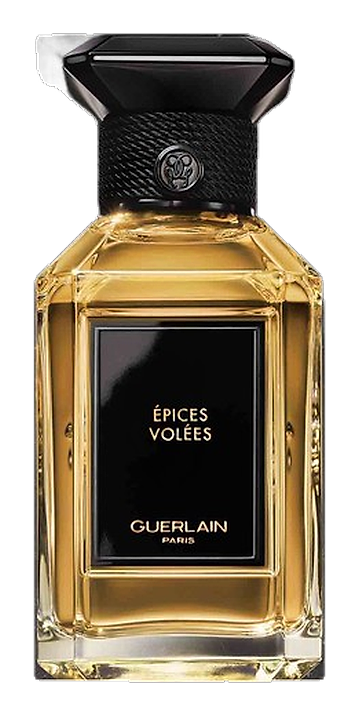
Épices Volées, meaning stolen spices, evokes something illicit, something seized. The name itself carries an air of transgression. What follows is a fragrance built on contrasts: brightness against depth, warmth against coolness, the expected against the surprising. The composition opens with crisp citrus, clean and immediate, before settling into a heart where herbaceous and floral notes intertwine with spiced elements. There is richness here, but also restraint. The blend feels both indulgent and composed, a study in controlled opulence rather than excess.
What makes Épices Volées distinctive is the way it holds two energies in one breath. The opening is bright, almost sharp, bergamot and lemon hitting fast, coriander and artemisia adding a green, slightly bitter counterpoint that keeps the citrus honest. Then the heart shifts register entirely. Sage and Bulgarian rose soften the space, but cardamom and clove push back, warm and brazen. The tension between these two halves, fresh and spicy, cool and warm, is where the fragrance lives. Neither side wins. That's the point.
The evolution
The bergamot and lemon arrive first, quick and clean. Within minutes the coriander and artemisia arrive, herbal, slightly bitter, an unexpected counterweight to the citrus brightness. The transition to the heart is where most people form their opinion: the clove asserts itself, and the Bulgarian rose opens quietly beneath it, sweet and slightly waxy. Some wearers detect a medicinal edge here, the artemisia and clove working together. Others hear only spice. The base is where Épices Volées earns its Guerlain name. Sandalwood and patchouli arrive together, creamy and woody, with a density that anchors the earlier brightness. Benzoin and labdanum add resinous warmth that settles into the skin, creating a lingering presence that develops slowly over hours.
Cultural impact
Part of the L'Art & La Matière collection, this fragrance belongs to a family of compositions that treat perfumery with artistic ambition. Épices Volées occupies a particular space within that lineage, offering warmth through its spice-forward character. The aromatic-herbal-citrus foundation provides structure, while the woody and resinous base adds dimension. The composition draws from chypre traditions while presenting them in a contemporary context, favoring subtlety over statement.
The House
GuerlainGuerlain stands as one of the oldest and most revered perfume houses in the world, founded in Paris in 1828 by Pierre-François-Pascal Guerlain. What began as a boutique on rue de Rivoli quickly became the preferred destination for Parisian society, attracting dandies and elegant women who sought custom-crafted fragrances. The house's influence grew to such heights that Guerlain earned the title of Official Perfumer to Napoleon III after presenting Eau de Cologne Impériale to Empress Eugénie as a wedding gift in 1853. This royal patronage marked the beginning of Guerlain's enduring association with European aristocracy, as the house went on to create fragrances for Queen Victoria and Queen Isabella II of Spain. Today, under the creative direction of Thierry Wasser, the fifth-generation perfumer, Guerlain continues to shape the landscape of fine fragrance with a portfolio spanning over 1,100 olfactory creations. The house remains headquartered at its legendary Champs-Élysées mansion, a historic monument that anchors Guerlain's position at the intersection of heritage and contemporary luxury.
The Creator
Jean-Paul GuerlainJean-Paul Guerlain's style resists easy categorization, though richness and depth define nearly every composition. He favored opulent oriental structures, warm woods and resins, and florals treated with almost sculptural precision.