The Story
Why it exists.
The beginning
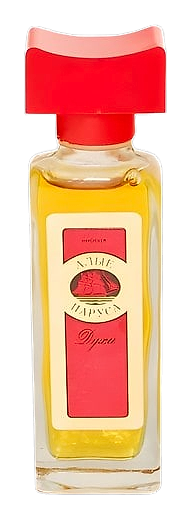
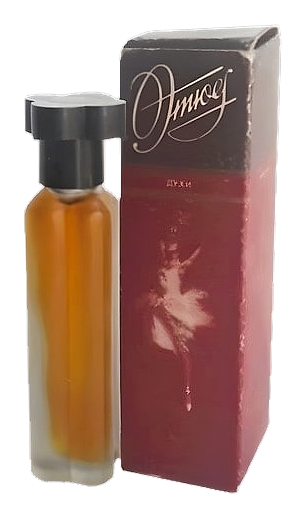
Этюд means "study" in Russian, a sketch, an exploration. In Soviet perfumery, this naming convention carried weight: it suggested a classical exercise, a deep engagement with an established form. The 1979 women's version arrived from a collective of four perfumers, Raisa Moroz, Antonina Prohorenko, Victoriya Rudyavskaya, and Alvina Kolpakova, working within a state system where fragrance was a democratic art, not a luxury indulgence. The study in question was floral aldehydic composition, that grand tradition running from Chanel No. 5 through the great post-war feminines. What resulted was a quiet contribution to that lineage: not a copy, not a competitor, but a parallel conversation in a different language, under different constraints, for a different woman entirely.
Floral aldehydic is a specific grammar. Aldehydes provide the lift, the effervescent quality that makes florals feel like they're floating rather than sitting heavy on skin. The four perfumers behind this composition worked within Soviet state procurement, using ingredients sourced through domestic production rather than global markets. The bergamot opens sharp and clean, aldehydes amplify it into something almost crystalline, then the heart of rose, violet, lilac, and heliotrope unfolds in a soft, powdery register that feels timeless rather than dated. Carnation adds a whisper of spice.
The evolution
The aldehydes arrive first, hitting the skin with that characteristic bright, slightly waxy shimmer, effervescent, almost like candlelight caught in champagne. Bergamot and sage add a green, aromatic lift that keeps the opening from feeling too sweet. The carnation adds a faint spice, barely there, just enough to keep the florals from becoming one-note. By the drydown, the florals have softened into something skin-close.
Cultural impact
Soviet perfumery operated under constraints distinct from Western houses, no luxury positioning, no elaborate advertising campaigns, no independent ateliers. What existed instead was something more democratic: fragrances made for everyday wear, named for ideas rather than status. Этюд exists in this tradition, a floral aldehydic that echoes the great post-war feminines without directly imitating them. For those exploring vintage Soviet scents or the broader history of floral aldehydic composition, it represents a distinct branch of that lineage. The house produced both mass-market colognes and more complex feminine compositions across several decades, and Этюд belongs firmly in the latter category.
The House
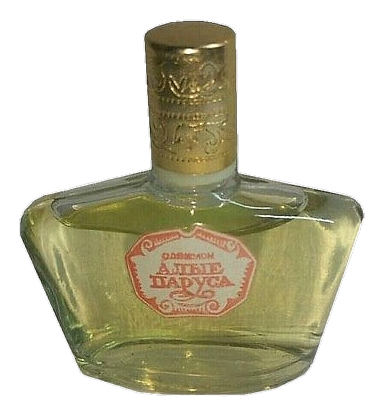
Алые Паруса (Alye Parusa)Алые Паруса (Alye Parusa) is a Soviet-era fragrance house whose name translates to 'Scarlet Sails,' drawn from Alexander Green's 1922 novella and its enduring romantic symbolism. Operating from the Soviet Union, the brand produced accessible eau de colognes, parfums, and women's fragrances across several decades, with documented releases spanning from at least 1960 through the early 1980s. The house offered both mass-market colognes like 'Марс одеколон' and more complex feminine compositions such as 'Этюд,' reflecting the breadth of Soviet perfumery during a period when state-affiliated producers supplied the majority of the domestic fragrance market.
The Creator
Raisa Moroz & Antonina Prohorenko & Victoriya Rudyavskaya & Alvina KolpakovaWhile specific fragrance releases remain limited in public documentation, Moroz's approach suggests a perfumer who values depth and emotional resonance over superficial impression. Her psychology background likely influences a style that considers how ingredients interact with…