
The Story
Why it exists.
The beginning
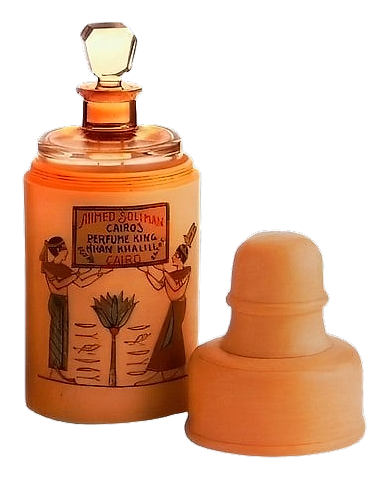
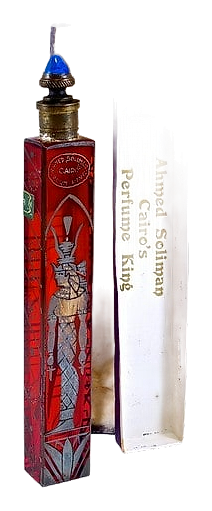
Harem was composed by Ahmed Soliman and released in 1925, a period that marked the rise of his standing as a creator of finely composed fragrances. Harem fits squarely within that work: a women's perfume whose name evokes an enclosed, private world, a place of intimacy, heat, and texture rather than display. The composition belongs to a broader line of Soliman fragrances, Cleopatra and Omar Khayyam among them, pieces that drew their names from the region's pharaonic and poetic inheritance, packaging the past as something to be carried on the skin. There is a quality in these names that feels like inheritance, as if the bottle were passing something older than itself into the present moment.
What sets Harem apart within the Soliman catalog is the specific tension in its structure, a layering of dense, weighty materials that carry ceremonial gravity against one another, each holding its own ground without ever overpowering the whole. The result is a fragrance that registers with unusual depth, behaving like a concentrated object rather than a faint atmospheric wash. Harem uses that density deliberately. The scent stays close, warming against the skin rather than projecting outward, behaving less like a perfume and more like a personal atmosphere.
The evolution
On skin, Harem opens with a dense, almost waxy impression, the materials arriving already cushioned and warm, as if the composition had been pressed into something solid rather than sprayed. Within the first twenty minutes the picture sharpens, a dry, slightly bitter edge surfacing to keep any sweetness honest and prevent the scent from drifting into syrup. As the first hour passes, the composition turns warmer and more golden, shifting from the brighter opening toward a softer, more ambered glow, and the whole thing begins to sit closer to the body, intimate rather than projected. The base materials don't announce themselves so much as they ground everything that came before, a quiet bed that holds the composition in suspension and gives it weight.
Cultural impact
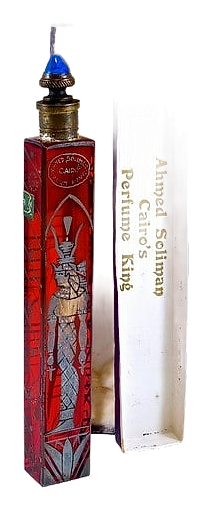
Harem belongs to a line of Soliman fragrances, Cleopatra and Omar Khayyam among them, compositions that drew their names from pharaonic and poetic inheritance, packaging the past as something carried on the skin. The fragrance is conceived less as a display piece than as a private object, something worn close to the body rather than projected outward, and its name reinforces that sense of intimacy, of scent held within an enclosed space. In that context, the meaning of Harem belonged to the wearer and the immediate surroundings rather than to any wider public reception, and the composition itself behaves accordingly.