The Story
Why it exists.
The beginning
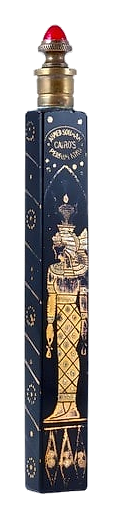
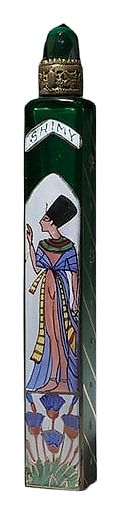
Queen Hatasu was released in 1925 by Ahmed Soliman, a perfumer whose work placed him at the center of Cairo's fragrance scene during a period when locally produced compositions were gaining wider recognition. His house produced fragrances during the same era that Soliman and the Shimy Brothers collaborated on bottles reflecting early twentieth-century Egyptian glasswork. Queen Hatasu belongs to a catalog anchored by names drawn from pharaonic heritage, Nefertiti, Cleopatra, Ramses, compositions that wore the region's material culture like a second skin. The fragrance is named for the sovereign line that defined Egypt's most storied era, a floral composition that carries the weight of its namesake through every accord.
What makes a 1925 Ahmed Soliman floral worth knowing is the sensibility behind it. These were compositions rooted in regional practice, shaped by materials and methods native to the place that produced them. The fragrances carried a certain gravity, drawing on botanicals that held meaning across generations, from ceremonial florals to resins long associated with sacred and domestic ritual. Queen Hatasu sits inside that tradition, a feminine floral that speaks the regional language of resin and petal without apology.
The evolution
The opening arrives soft and immediate, a powdery floral that doesn't wait to make its presence known. There's a warmth underneath from the start, something quiet humming beneath the surface, like sunlight through a closed window. The first moments set a tone that feels deliberate but unhurried, the kind of introduction that draws you in rather than announcing itself across a room. As the composition settles past its opening phase, the florals deepen, losing any initial sweetness and finding something earthier at the base. The character shifts gradually, each layer folding into the next without sharp transitions or obvious breaks. By the middle hours the scent has softened into something more ambiguous, less specific, more like the memory of a flower than the flower itself. The florals become suggestion rather than statement, a trace that hovers at the edge of recognition.
Cultural impact
Queen Hatasu sits within a small catalog of vintage Ahmed Soliman compositions. The bottles associated with his work, glass flasks with gilt-metal mounts and pharaonic motifs produced with the Shimy Brothers, are recognized as 19th/20th century Egyptian hand painted objects of note. These vessels carry pharaonic imagery in gilt detail, connecting the fragrance to a visual vocabulary drawn from the sovereign line it references.