Golden Wattle
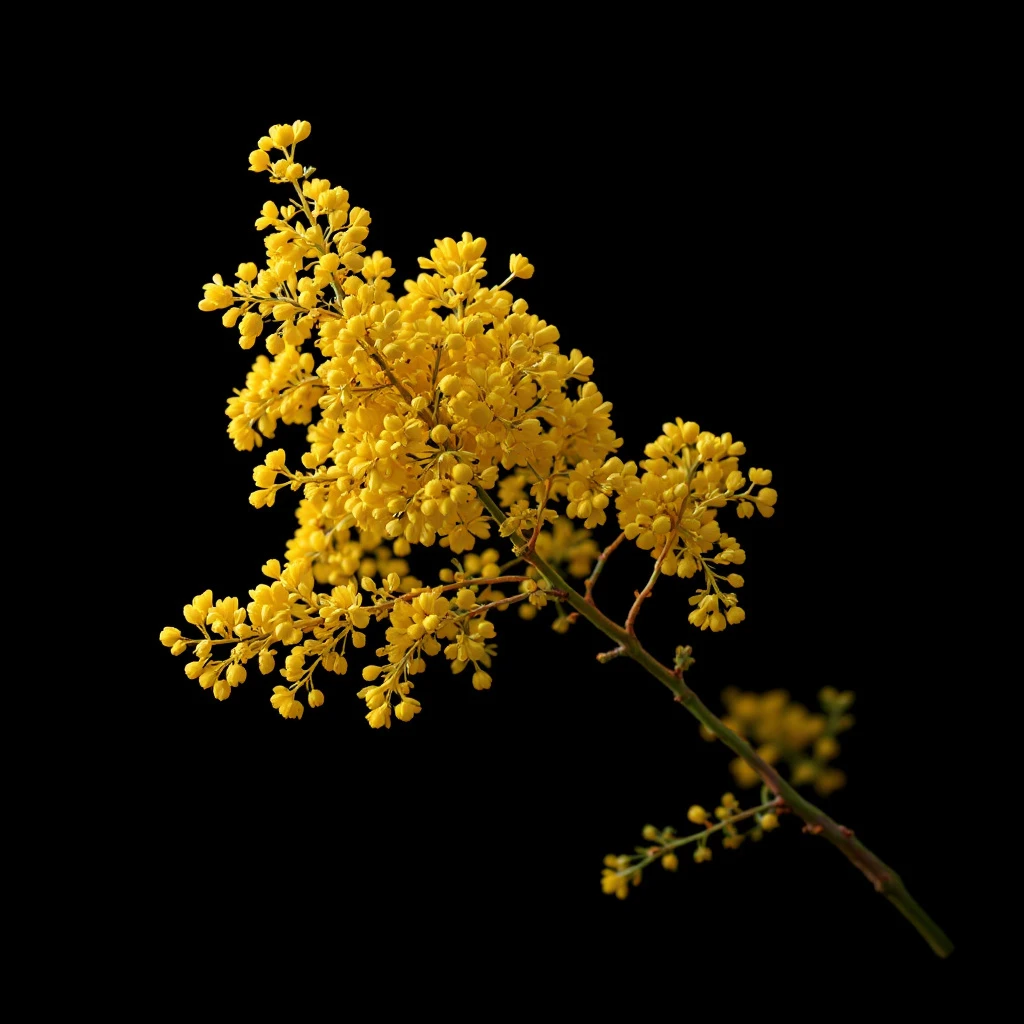
Australia's national flower delivers a sun-warmed accord of honeyed pollen, soft coumarin warmth, and green stemmy facets, a botanical signature unlike anything the traditional European perfumery palette ever captured.
Character
How it smells
Liquid sunshine from Australia's golden bloom.
Golden Wattle's flowers contain over 100 individual volatile compounds, one of the most complex chemical profiles ever documented in a single native bloom.



Origin
Australia
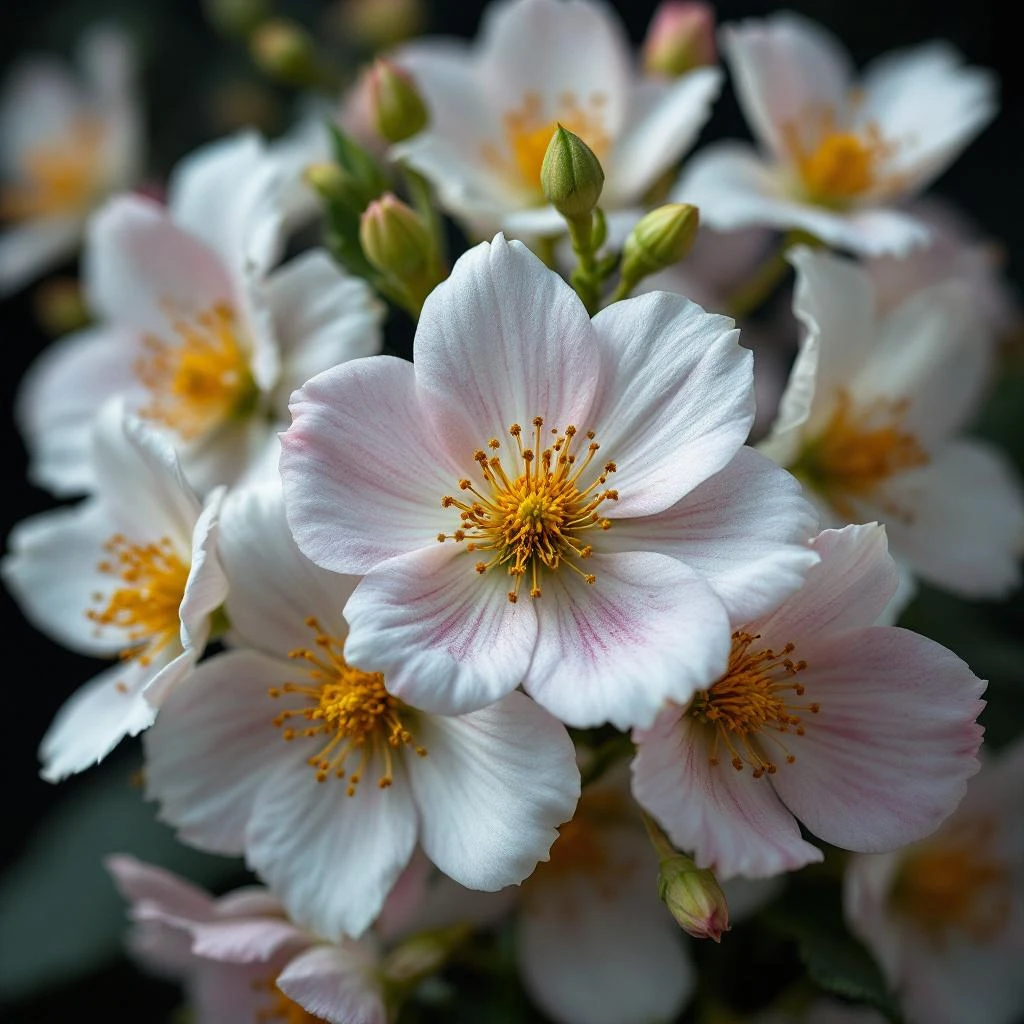
Acacia pycnantha was declared Australia's official national floral emblem in 1988, yet Indigenous Australians had been gathering the blooms for ceremonial and medicinal purposes for over 40,000 years. European botanists first catalogued the species in the 1840s, and early settlers observed Aboriginal communities infusing the flowers in water to treat sore throats and skin irritations.
The plant's migration into fragrance composition is recent by industry standards; Australian native botanicals entered serious perfumery in the early 2000s, when a handful of growers and independent distillers began experimenting with solvent extraction on commercial scales. Prior to that, Golden Wattle appeared only occasionally in traditional potpourri blends.
Today it features prominently in compositions seeking distinctly Antipodean character, a single botanical capable of anchoring an entire fragrance around the sensory identity of the Australian bush. Some perfumers credit its complex coumarin-rich profile as proof that the Southern Hemisphere offers olfactive territory still barely charted.
Wears it best
Fragrances featuring Golden Wattle

Brands
Brands known for Golden Wattle
Good to know
Questions, answered
The essentials on Golden Wattle in perfumery: how it smells, where it comes from, and how it behaves on skin.
What does Golden Wattle smell like?
Golden Wattle carries a warm, honeyed floral accord built on powdery pollen, soft coumarin sweetness, and faint green stem facets. It reads as sunlit and slightly hay-like, drier and more complex than mimosa, its closest botanical cousin.
Is Golden Wattle the same as mimosa?
No, though they share a family. Golden Wattle (Acacia pycnantha) is an Australian native, while mimosa absolute comes from Acacia dealbata, a related species cultivated mainly in southern France. Their olfactive profiles differ noticeably.
Where does Golden Wattle absolute come from?
Most commercial Golden Wattle absolute is sourced from small-scale growers in southeastern Australia, particularly Victoria. Harvest typically occurs between July and October when the trees reach peak bloom.
Why is Golden Wattle so expensive in perfumery?
The yield is exceptionally low. Several hundred kilograms of hand-picked fresh blossoms are required to produce one kilogram of absolute, and harvest is seasonal and labor-intensive, all factors that drive cost upward.
How is Golden Wattle extracted for perfume?
Producers use solvent extraction with volatile solvents such as hexane. The blossoms are washed to draw out waxy aromatic compounds, then processed into concrete and alcohol-washed into absolute, a method popularized by François Coty in the early 20th century.
When did Golden Wattle enter modern perfumery?
Australian native botanicals entered serious fragrance composition in the early 2000s. Golden Wattle in particular gained international attention as growers began scaling solvent extraction for export to European and Japanese perfumers.
Is Golden Wattle sustainable to harvest?
Most commercial harvesting is done from cultivated plantations rather than wild populations, which helps protect native bushland. The trees bloom annually and require minimal irrigation once established.
What fragrance families does Golden Wattle suit?
Golden Wattle bridges gourmand, floral, and soft-amber territories particularly well. Its natural coumarin content makes it a strong candidate for fougère-style compositions and warm solar accords.




