
The Story
Why it exists.
The beginning
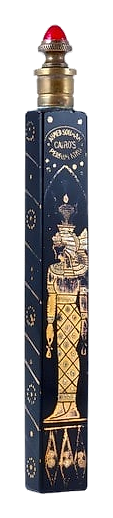
Ahmed Soliman released Lily of the Valley in 1925, stepping forward with a composition that asked a single white floral to carry an entire fragrance. The soliflore structure strips away every supporting actor: there's no spicy opening to cut through, no resinous base to ground the composition, no gourmand warmth lurking underneath. Just the flower, unadorned, doing all the work. That kind of restraint takes confidence. It takes a perfumer willing to let the raw material speak for itself, trusting that the bloom alone is interesting enough to hold attention from first spray to final fade. The result is a fragrance that reads less like a constructed composition and more like a botanical specimen captured in glass.
Lily of the Valley sits in a soliflore structure, a form where a single flower carries the entire composition. That structure demands a particular kind of discipline: there's no base to anchor it, no spicy top to distract, no gourmand warmth underneath. The flower has to perform alone, and any flaw in the material shows immediately. This is a soliflore for a perfumer confident enough to strip away everything but the bloom itself.
The evolution
The opening is immediate and unmistakable: lily of the valley at full volume, cool and green, with a dewy quality that reads like crushed stems rather than petals alone. There's a faint soapy brightness in the first 30 minutes that gives the flower an almost laundered quality, clean linen left on a line. As the composition moves into its heart, the green intensifies slightly, the way a garden smells after rain when the leaves release their moisture. The sweetness deepens but stays restrained. No honey, no powder, no musk pulling it into something warmer. In the drydown, the lily loses its crispness and softens into something more abstract, a floral memory that sits close to skin. The progression is remarkably linear in structure, a slow cooling rather than a dramatic transformation, but the texture shifts noticeably.
Cultural impact
Lily of the Valley occupies an unusual place within Ahmed Soliman's body of work. A stripped-down white floral soliflore is a statement of range, a willingness to build a fragrance around a single note and trust that note to hold attention without any of the heavier materials that often anchor Middle Eastern compositions. The structure here is radical in its simplicity: no base, no spicy opening, no gourmand warmth, just the flower, unadorned, doing all the work. That kind of restraint reads as craft, not limitation. The production was apparently discontinued, which has shifted the fragrance from a product into an artifact.




















