The Story
Why it exists.
The beginning
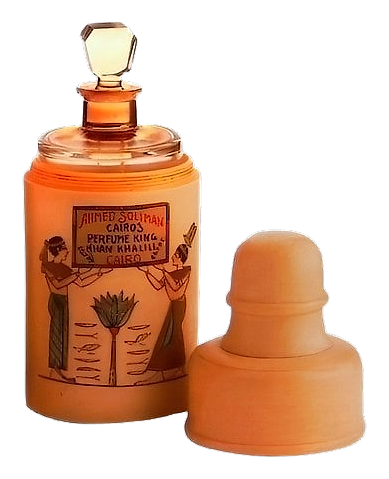
Tutankhamon Pharaoh Scent arrived in the mid-1920s, a product of Ahmed Soliman's perfumery at the Khan el-Khalili bazaar in Cairo. The fragrance was, at its heart, a personal statement, one that wore its dynasty plainly. What set it apart was the insistence on materials and methods Soliman knew firsthand rather than borrowed from elsewhere. The composition carried the patience of an old market tradition, built layer by layer with care. You smell it and recognize a deliberate, unhurried construction. The pharaonic name was a surface gesture; the real story lived underneath it, in the choices about what went into the bottle and what was deliberately left out.
What made Tutankhamon Pharaoh Scent distinctive wasn't a single dramatic ingredient or a flashy top note; it was how the whole thing held together on the skin. The composition moves slowly, unfolding close rather than broadcasting outward. You catch the warmth first, then the depth underneath, rather than the other way around. It rewards attention given at close range. Wearing it feels less like announcing yourself and more like leaving a trace.
The evolution
The opening arrives dense and immediate, a curtain that seems already settled rather than rising. There's brightness at the very top, a fleeting lift before the composition commits to its heavier materials. Within minutes, the lighter register steps back and the base takes over. The heart stage is where the composition settles into its true register, a slow bloom of warmth that clings close. No sharp edges, no sudden accelerations, just a gradual deepening that rewards patience. The texture feels rich without ever tipping into heaviness, a careful balance that speaks to the oil format underneath. As hours pass, the base softens and rounds rather than dissipating. What was dense at first becomes almost intimate, a quiet warmth that sits on fabric long after the bottle is capped. The sillage stays modest, and that restraint suits the weight of what's been put down.
Cultural impact
What makes Tutankhamon Pharaoh Scent worth noting is simply its origin point: a fragrance composed in Cairo by an Egyptian perfumer, produced at a bazaar known for centuries of trade in aromatic materials. The surviving bottles, fine glass produced through the house's partnership with the Shimy Brothers, remain tangible artifacts of a Cairo perfume house working at the height of its craft. They offer a glimpse into how a local perfumer responded to the moment of pharaonic revival without imitating European approaches.