The Story
Why it exists.
The beginning
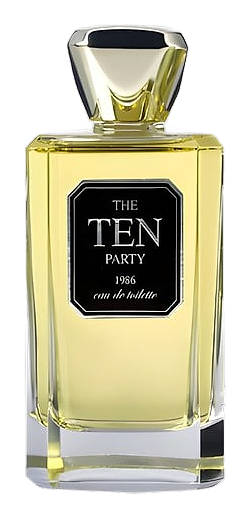
The Ten Party 1986 is The Party's debut, launched in 2008. Perfumer Paolo Borgomanero composed it as the male counterpart to The Party in Manhattan. Borgomanero built it around an aromatic-spicy skeleton, opening with petitgrain and Sicilian lemon before steering into lavender, tarragon, and a generous slug of caraway that keeps the whole composition honest. The opening hits bright and green, the petitgrain lending a leafy, slightly bitter lift that the Sicilian lemon slices through with zest rather than sweetness. Lavender arrives soon after, but it doesn't play the soft, soapy role it takes in most aromatics. Here it carries a drier, almost medicinal edge, the kind of herbal coolness that sits close to the skin.
What sets this composition apart is the caraway. Combined with tincture of rose at the top, it gives the opening a herbal, faintly spicy character that the Sicilian lemon cannot fully sweeten over. The rose adds just enough dark fruitiness to keep the caraway from reading as purely savory, a quiet sweetness underneath all that green and pepper. The heart trio of jasmine, tarragon, and clove pulls the temperature down slightly, introducing a greenish floral that cools the composition after the bright, sharp opening.
The evolution
The opening belongs to the petitgrain and lemon, sharp and almost bracing, with that caraway spice flickering underneath. The petitgrain cuts first, green and a little bitter, and the lemon brightens the edges without overwhelming them. Soon after, lavender settles in and softens the overall shape, while the tincture of rose starts to surface. It reads quieter than expected, more cologne-adjacent than soapy, with a faint waxy depth from the rose that gives the early phase a darker undertone than the citrus suggests. As the composition moves forward, the heart takes over. Jasmine arrives not as a white-floral exclamation but as a green, slightly indolic note sitting alongside tarragon and clove. The composition darkens just enough to suggest evening rather than morning, the clove lending a dry, smoky heat that anchors the floral and herbal elements.
Cultural impact
Worth noting that this is the male counterpart to The Party in Manhattan, and that pairing positions it as a companion piece rather than a replacement. The shared structure between the two compositions means wearing one inevitably invites comparison with the other, and many enthusiasts experience the two as a matched set, one feminine-coded, one masculine-coded, designed to be worn across a shared evening rather than apart. Vote data for the scent shows recognition spread evenly across winter, spring, summer, and fall, suggesting it functions less as a seasonal specialist and more as a versatile aromatic that adapts to whoever reaches for it.