
The Story
Why it exists.
The beginning
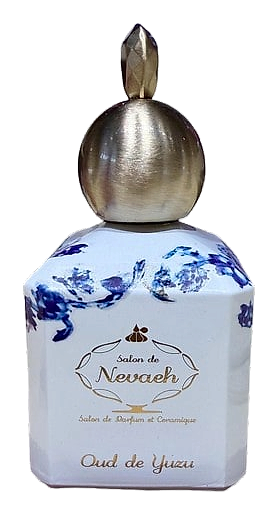
Oud De Yuzu arrives in 2026 from Salon de Nevaeh, a South Korean niche perfume house from South Korea since 2017. Its central idea is a meeting of opposites: luminous Korean yuzu and the deep, mystical shadow of oud. The citrus opens the composition with light, fruit, and a clean floral lift, while oud adds weight and depth. Magnolia, blackcurrant, and kumquat keep that first impression vivid rather than solemn. The result is a fragrance built around contrast, where fleeting brightness settles into something darker, warmer, and more enduring, with the listed notes shaping a composition that moves from citrus and floral top notes through woods, resins, and a softly powdered drydown.
The unusual part is the handshake between yuzu and oud. Citrus can make a composition feel immediate, while oud tends to pull it inward, toward smoke, resin, and shadow. Salon de Nevaeh places that tension at the center, then builds around it with magnolia, kumquat, blackcurrant, bay leaf, sandalwood, juniper, and cashmere wood. The floral and powdery notes soften the hardwood character, while myrrh, orris root, vetiver, and ambrein shape the drydown.
The evolution
It starts with yuzu and kumquat, with magnolia giving the citrus a soft floral edge. Blackcurrant adds a dark, juicy punctuation, keeping the opening from becoming too tidy. Bay leaf and juniper introduce aromatic and herbal notes as the composition develops. Sandalwood and cashmere wood contribute to a smoother, warmer middle, creating a transition between the citrus opening and the deeper oud accord. Then oud arrives as a dark, resinous presence, supported by myrrh and vetiver. The finish becomes powdery through orris root and ambrein, leaving a gentle trace after the sharper citrus has gone. The note sequence moves from yuzu, kumquat, magnolia, and blackcurrant through bay leaf, juniper, sandalwood, and cashmere wood before settling into oud, myrrh, vetiver, orris root, and ambrein.
Cultural impact
Salon de Nevaeh’s connection to Korean identity gives Oud De Yuzu a specific cultural frame. The fragrance places Korean yuzu alongside oud, a globally familiar accord, creating a composition that brings together two distinct fragrance references. Its opening is described through citrus from the East, while the note list includes magnolia, kumquat, blackcurrant, bay leaf, sandalwood, juniper, cashmere wood, myrrh, orris root, vetiver, and ambrein. This pairing gives the scent a cross-cultural character without reducing either element to a simple category.