
The Story
Why it exists.
The beginning
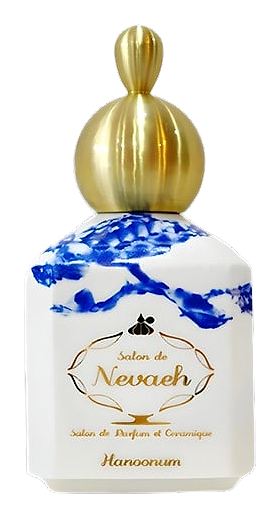
The name Hanoonum comes from a single Korean concept: when you go beyond the mountains, only sky and sea remain. Salon de Nevaeh built the entire fragrance around that threshold, the exhale after effort, the view that justifies the climb. Released in 2018 as part of the house's debut catalog, it arrived during a moment when Korean creative industries were gaining global recognition. The house organizes its work around Korean aesthetic concepts rather than Western note structures, and Hanoonum is one of its purest expressions of that philosophy, translating an idea into sensation rather than building a pyramid of materials.
What makes Hanoonum structurally interesting is how it inverts the typical fragrance arc. Most compositions open sharp and fade soft. Here, the top notes, Makuwa melon and almond, arrive with unexpected creaminess, almost milky, before an ozonic coolness cuts through. The melon variety matters: Makuwa is a Korean melon, familiar in the region's cuisine and markets. Its inclusion isn't decorative. It's a quiet assertion of Korean terroir even within a composition that could read as universal. The Korean rose in the heart doesn't announce itself the way rose typically does in Western perfumery. It surfaces gradually, more atmospheric than assertive.
The evolution
The opening hits like mist lifting over a melon field, sweet creaminess from almond, watery coolness from the ozonic notes. Cedar and sandalwood don't arrive so much as reveal themselves, like the trees that were always there beyond the fog. Petitgrain adds a slight bitter-green edge that keeps the sweetness honest. Korean rose begins to surface, almost as a rumor. As the aquatic notes recede, mandarin and bergamot brighten the composition without turning it sharp. The bergamot does something interesting: it doesn't lead, it supports, lifting the other elements rather than demanding attention. By drydown, most of the sweetness has settled. Cedar and sandalwood return as soft wood, musk close to the skin, bergamot and a ghost of almond. The rose is gone entirely. This is the after: clean, quiet, lasting several hours into the evening.
Cultural impact
Hanoonum occupies a specific position: it represents Korean niche perfumery at a moment when Korean creative industries were achieving global recognition. The fragrance doesn't try to sound Korean to a Western audience or Korean to itself. It simply exists within that cultural register, the way a Korean melon, a Korean rose, and a Korean philosophical concept can translate directly into scent. Wearers describe it as the kind of fragrance someone wears when they've moved past needing to prove anything.