The Story
Why it exists.
The beginning
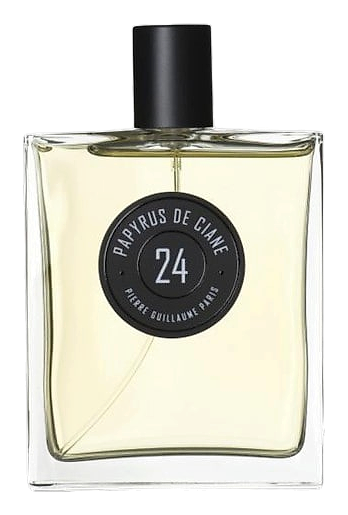
Papyrus de Ciane takes its name from the Ciane River in Sicily, the largest natural papyrus reserve in the world. Pierre Guillaume translated that landscape into scent. Not the water or the reeds themselves, but the dense green life pressing against the riverbank, papyrus umbels catching light while something older hums underneath. The opening hits with a green so vivid it almost tastes astringent, the kind of green that makes you think of torn stems, crushed leaves, sap still wet on your fingers. Within moments the composition begins to cool, and a powdery, slightly smoky undertow pulls the brightness down into something more contemplative. What remains is the suggestion of a riverbank in late afternoon, the reeds long gone from the picture, only their shadow left on the water.
Galbanum, the dominant material here, is one of perfumery's most aggressive green notes. Raw, it smells sharp and vegetal, almost bitter, with a metallic edge that can read as unpleasant in untrained hands. The challenge has always been making it wearable. Pierre Guillaume's answer was mousse de saxe, that powdery, leathery-mossy accord rooted in classic chypré construction. It catches galbanum's sharpness and folds it into something smoother, almost vintage in register.
The evolution
The first fifteen minutes are loud. Galbanum arrives unapologetically sharp, almost metallic, the way a freshly cut stem smells before you bring it to your nose. Broom blooms alongside it, faint and waxy, barely there. Then something shifts. The green doesn't disappear, but the mousse de saxe moves in, softening everything into a powdery, slightly smoky haze. Frankincense surfaces briefly, dry and church-like, then dissolves. By hour two, the composition has settled into its real register: mossy, cool, faintly sweet at the edges. On fabric the next morning, the galbanum has long gone but the powdery moss lingers, almost ghostly. The drydown is quieter than the opening promises, and that restraint is what gives the fragrance its particular character.
Cultural impact
Papyrus de Ciane sits in a specific corner of the green chypré tradition. The galbanum-dominant style it draws from belongs to a lineage most contemporary perfumery has largely moved away from, and that's exactly what gives it its particular appeal. Wearers who reach for it tend to know what they're getting: an unapologetically green, powdery composition that doesn't soften itself for modern tastes. The mossy, resinous lean sets it apart from lighter green fragrances in the broader category, and the powdery backbone gives it a vintage gravity that newer constructions rarely achieve.