
The Story
Why it exists.
The beginning
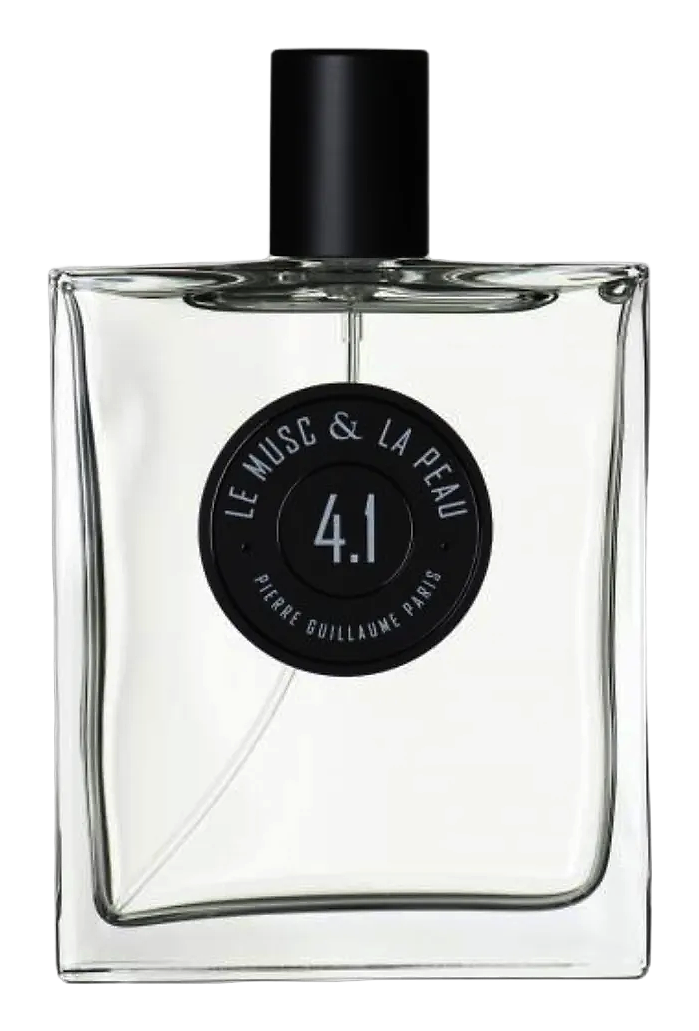
Pierre Guillaume designed Le Musc & La Peau 4.1 in 2016 as a reinterpretation of his earlier Musk Milk accord, stripping away the chocolate hull that defined its predecessor to build something closer to the bone. The idea was simple: what if a fragrance smelled less like perfume and more like the person wearing it? Seven different musks form the skeleton, layered to evoke the warmth and texture of skin rather than mask it. Ylang-ylang, tonka bean, amber, cedar, and rosemary round out the composition, each ingredient chosen to enhance the proximity, not overpower it. The name itself says it all: the musk and the skin. One to wear, the other to become.
The seven-musk accord is where the real work happens. Different musks carry different textures, some read clean, others warm, some almost animalic. Blended together, they cancel the cartoon and keep the truth. Ambroxan amplifies the warmth without adding weight; sandalwood gives the base a creamy persistence that holds through the day. Aldehydes do what they always do: catch the light at the opening, then disappear once the work is done. Ylang-ylang here doesn't smell tropical, it smells like the moment before skin contact. Intimate. Alive. Tonka bean finishes warm, the way skin finishes warm when you've been wearing something for hours and it stops being fragrance and starts being you.
The evolution
The opening hits fast, aldehydes spark against bergamot, a brief effervescence that could read as classic if rosemary weren't there to cut it with green. Thirty minutes in, the aldehydes have done their work and the musks begin their slow reveal. This is where the skin metaphor kicks in: ylang-ylang doesn't smell like florals here, it smells like the scent someone's neck makes in warm air. Tonka adds sweetness without sweetness, skin-warm, not sugar-sweet. Cedar and sandalwood anchor the heart, giving it something substantial to settle into. Over time, you're left with the musks themselves, a clean, warm close that stays within kissing distance. What surprised early wearers: it doesn't project. It stays. And when it fades, it fades like skin fading, slowly, then all at once.
Cultural impact
The fragrance sits at an interesting intersection: musks have been a perfumery staple for decades, but the seven-musk skin accord in Le Musc & La Peau reads as both traditional and quietly radical. It's not trying to reinvent anything, it's trying to get closer to skin than skin itself. Aldehydes provide an initial lift, a brief nod to classic perfumery, before the musks take over. What makes it resonate isn't the projection or the sillage, it's the closeness. The way it works on skin rather than in the room. Early wearers discovered something unexpected: it doesn't project. It stays.