The Story
Why it exists.
The beginning
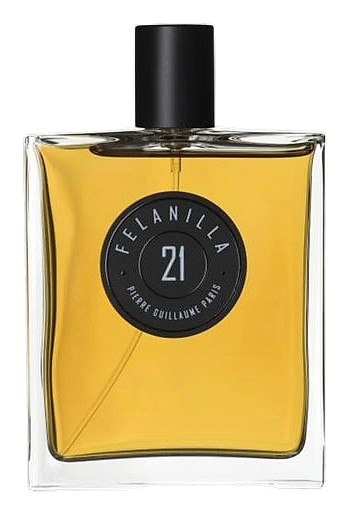
The name is the concept: Felanilla, from the contraction of 'Feline' and 'Vanilla.' Pierre Guillaume built this fragrance around the idea of a vanilla that moves differently, supple and warm but with something watchful underneath, the way a cat commands a room without announcing itself. Released in 2008 as part of the Numéraire collection, Felanilla joined a line of compositions Guillaume was building around contrast: cool and warm, powdery and sweet, animal and genteel. The collection number 21 simply marked its place in the series, not a story, just an address.
Three absolutes anchor the composition: Tahitian vanilla, Florentine iris, and hay absolute. That's unusual. Most fragrances build around a dominant note with supporting players; Felanilla runs three in parallel, letting them negotiate space rather than take turns. The saffron amplifies the tension, it's spice, yes, but also a kind of astringency that keeps the vanilla honest. Hay absolute brings an earthy, almost agricultural dryness that prevents the whole thing from floating upward into abstraction. The result is a fragrance that feels resolved rather than layered, as if these materials have always belonged together.
The evolution
The opening is all saffron, sharp, almost medicinal, the kind of brightness that announces itself before you've even finished applying. Then the iris arrives, powdery and cool, and the conversation changes. Vanilla doesn't charge in. It drifts, gradually thickening the composition while hay absolute keeps everything grounded in something real. By the mid-drydown, the vanilla and amber have fused into warmth that sits close to the skin, intimate rather than projecting. Hours later, on fabric, a trace of saffron's spice lingers, the one element that never fully settles, the reminder that this started with something unexpected.
Cultural impact
Felanilla arrived in 2008 as part of the mid-2000s 'new iris' movement that blurred the line between mainstream and niche perfumery. Pierre Guillaume had been exploring iris through earlier releases, Iris Oriental in 2006 and Cuir d'Iris in 2007, but Felanilla took a different angle, pairing the powdery note with vanilla and saffron rather than leather. That positioning, an iris-heavy oriental that wasn't about woods or incense, set it apart from contemporaries and gave it a lasting quality that outlasts trends. It's remained in production not through nostalgia but through genuine appeal to those seeking something that smells finished rather than engineered.