
The Story
Why it exists.
The beginning
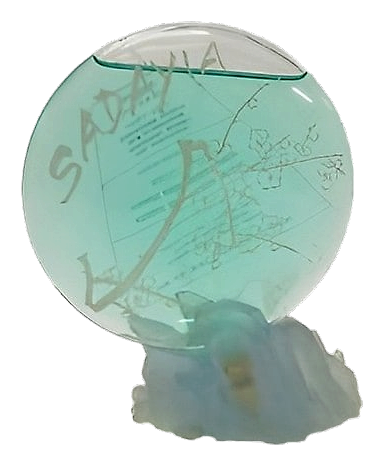
Sadayia arrived in 1997, a year that placed it within a particular moment for tea-tinged floral work. While many compositions of that era chased mineral and aquatic territory, Sadayia turned inward, toward something quieter: a floral built around a teacup rather than a garden. The name carries no obvious reference, no perfume-world mythology. It sounds like a place, or a person you almost remember, and the scent behaves the same way. Familiar without being specific. The kind of composition that reveals itself to the wearer slowly, which is exactly Pacoma's way. The house favors bottles that don't announce themselves and formulas that reward patience over performance. Sadayia fits that philosophy without strain. It isn't built to impress from across the room.
What makes Sadayia worth attention is the Earl Grey threading the top notes. Bergamot and citron would be expected. Bergamot, citron, and the tannic dryness of black tea is a different proposition, and it reframes everything underneath. The jasmine and rose in the heart could have read as a standard white-floral bouquet. With the tea pulling astringent across the top, they read cooler, more lifted, more like something you'd wear to a quiet lunch than a perfume counter. The sandalwood and vanilla base keeps it from drifting too far into cologne territory, giving the florals a soft landing rather than letting them evaporate. Pacoma chose a limited palette and layered it with intent.
The evolution
The opening belongs entirely to the top: citron and bergamot sharp enough to almost sting, with Earl Grey threading through like cold water poured over a hot spoon. It reads bracing, almost clinical, and the tea is doing more work than you expect, drying the citrus out so the brightness feels adult rather than playful. As the early sharpness softens, the florals push up from underneath. Freesia leads with a cool, green-stemmed clarity, followed by jasmine that never goes indolic, then rose, tucked low and almost powdery. Lilac drifts through the arrangement too, adding a soft, soapy hush that rounds the sharper edges without flattening them. The combination feels less like a garden and more like a florist's window on a spring morning. The tea doesn't disappear. It thins out, becomes suggestion rather than statement, a dryness that keeps the heart from turning sweet.
Cultural impact
Sadayia reads as a floral that knows how to hold its posture without raising its voice. It's the kind of scent a collector pulls out when the mood calls for something polished, something with enough structure to feel intentional rather than decorative. The tea-and-citrus opening gives it a clarity that separates it from the sweeter florals crowding the same shelf, and the woody base keeps it grounded long after the first hour. It doesn't chase attention. It earns it, slowly, through wear rather than declaration.