
The Story
Why it exists.
The beginning
Pacoma, the American niche house that has been crafting restrained aromatic studies since the 1980s, approached Racer with the same methodical curiosity that produced earlier works like Swann and Gatsby. By the early 1990s the brand had built a reputation for scents that explore structure and restraint, and Racer was conceived as a further examination of what a woody composition could feel like when stripped of excess. The perfumer chose a concise palette of cedar, patchouli, and a touch of citrus to create a fragrance that would behave like a continuous heart note, inviting the wearer to observe how a single accord evolves over time without the distraction of an opening fanfare or a base‑focused dry‑down.
The decision to eliminate top and base notes reflects Pacoma's broader philosophy of olfactory reduction, where each ingredient must earn its place in a compact composition. In Racer the citrus serves as a fleeting accent, not a main event, while the cedar and patchouli provide the lasting woodiness that defines the scent. This approach also influences how the fragrance pairs with the wearer; because it stays close to the skin, it works best in professional or intimate settings where a subtle, enduring presence is preferred over a bold, room‑filling projection.
The evolution
Racer opens the moment you spray, because there is no formal top note; a brief citrus burst appears, then almost immediately the cedar emerges, joined by patchouli and a green herbaceous thread that gives the heart a slightly bitter edge. As minutes turn to hours the citrus retreats, allowing the cedar to assert its dry, pencil‑shavings character, while the patchouli adds a faint earthiness that rounds the woodiness. The herbaceous notes linger, offering a faint green lift, but the dominant narrative remains the seamless, linear progression of cedar‑patchouli, which holds court until the fragrance finally fades. The lack of a distinct dry‑down means the wearer experiences a single, uninterrupted woody heart that gradually thins, leaving behind a quiet, tactile finish.
Cultural impact
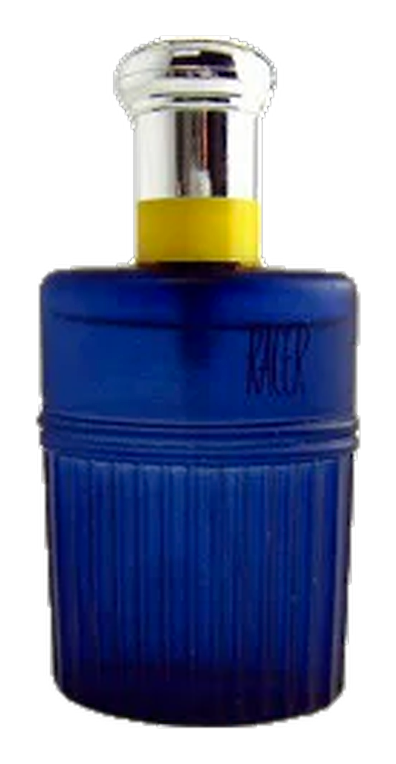
Since its 1992 debut, Racer has become a quiet cult favorite among collectors who prize its athletic edge and minimalist bottle. Though discontinued, it still circulates on secondary markets, often paired with vintage racing memorabilia. Wearers note its ability to stand out in a crowd of 90s woody-citrus staples, making it a conversation starter at retro-themed gatherings.