
The Story
Why it exists.
The beginning
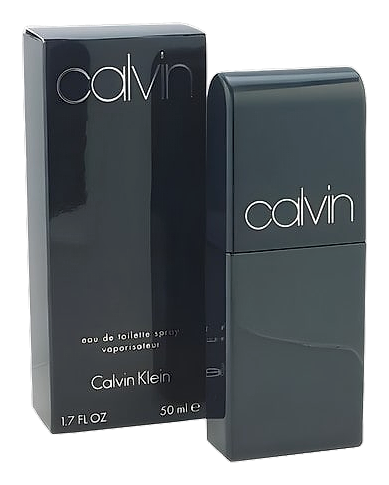
Calvin launched in 1981 as the counterpart to Calvin Klein's debut women's fragrance two years earlier. It was the brand's first dedicated men's cologne, a statement of intent for a fashion house that had already built its reputation on clean lines and deliberate restraint. IFF composed the formula around a bright citrus top and an herbal-green heart that felt modern for the era, anchored by the kind of woody-musky base that could hold on skin all day. The name said everything: just Calvin. No flourish, no mythology. A fragrance for someone who had already arrived.
What makes Calvin stand out is that sharp-bitter tension running through the heart notes. Chamomile is unusual in men's fragrance, it reads medicinal, almost astringent, more herbal tea than perfumery, and here it's placed front and center alongside neroli and mandarin. The effect is a top phase that smells crisp and slightly dry, not sweet. The tarragon and geranium heart that follows softens the edges without losing that herbal character, creating a middle stage that bridges green and floral without tipping into either. Then patchouli and sandalwood arrive late and stay.
The evolution
The citrus opens sharp and stays there for the first ten minutes. Neroli and bergamot dominate, with chamomile's bitterness cutting through like a blade. By the half-hour mark, the citrus recedes and the herbal heart takes over, tarragon and geranium give it a slightly spiced, slightly floral warmth that feels nothing like the opening. The transition is surprisingly smooth for a cologne of this era. The drydown belongs to patchouli and sandalwood. Vetiver lingers closest to the skin, adding an earthy depth that keeps the base from going flat. On most skin, this holds for a full workday. Close enough to notice if someone leans in. Gone before it offends.
Cultural impact
Calvin arrived at a moment when men's fragrance was still largely defined by heavy woods and orientals. This one played differently, lighter, sharper, more herbal. It never dominated headlines the way CK One would a decade later, but it found its audience: men who wanted something crisp and honest, with no excess.