The Story
Why it exists.
The beginning
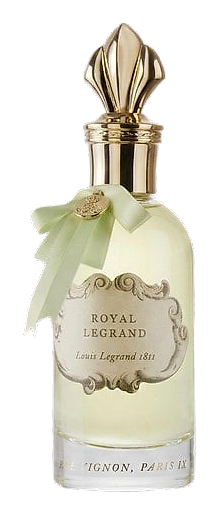
Royal Legrand was launched in 1811, a period when Oriza L. Legrand had already established itself as a presence in French perfumery. By the early nineteenth century, the maison had built a steady reputation for its compositions, working with noble raw materials that were often natural in origin. The fragrance itself opens with a brisk, almost bracing accord of camphor and black pepper, two top notes that arrive with a cool, peppery snap. The camphor lends a medicinal clarity at first spray, while the black pepper adds a dry, slightly dusty warmth that grounds the opening before the heart has fully unfolded. Together they create a top accord that feels both crisp and composed, a structured entry rather than a soft or syrupy one, setting the stage for what follows beneath.
What makes the structure unusual is the layering of camphor and black pepper at the top, set against a heart that pivots to green grass and orange peel rather than the rose-driven florals typical of the period. The green grass note brings a dewy, almost hay-like freshness into the mid-stage, while the orange peel adds a bright, slightly bitter citrus lift that keeps the heart from feeling heavy or overly sweet. As the hours pass, the base leans heavily on patchouli, labdanum, and Peru balsam, three materials that give the drydown its resinous backbone.
The evolution
The first fifteen minutes belong to camphor and black pepper, a cool, slightly medicinal sharpness that feels bracing rather than aggressive. Nutmeg and clove surface quickly behind it, adding warmth without sweetness. As the opening settles, the camphor recedes but never disappears. It threads through every later phase like a permanent structural note. The heart arrives within thirty minutes, and this is where the composition shifts toward something greener and more unexpected. Bay leaf, tangerine zest, and the orange peel give it a bright, slightly bitter edge that contrasts sharply with the spiciness that came before. Cedarwood and sandalwood anchor the middle without dominating. There's a subtle herbal quality here that reads almost like a garden after rain, cold air moving through herbs. By the second hour, the base takes over. Patchouli arrives warm and earthy, joined by benzoin, labdanum, and Peru balsam. These three create a resinous drydown with real depth, sweet in the way that amber is sweet, but grounded by the patchouli's earthiness.
Cultural impact
Royal Legrand sits comfortably among the more aromatic, spice-forward compositions in the house's catalog. Its camphor opening gives it a distinctiveness that rewards curiosity, offering a cool, almost medicinal clarity at first spray before the warmer, resinous base settles in. The black pepper adds a dry, peppery bite that carries through the early stages, while the green grass and orange peel in the heart keep things feeling lifted and alive rather than heavy. As the fragrance dries down, the patchouli, labdanum, and Peru balsam take over, building a warm, balsamic foundation that lingers for hours.