The Story
Why it exists.
The beginning
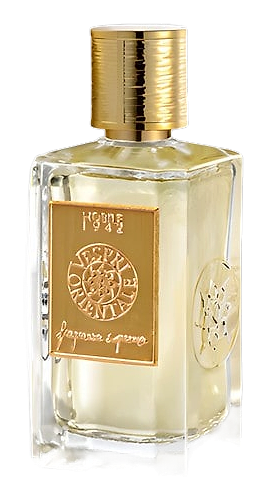
Vespri Orientale translates to 'Evening Prayers of the East', that liminal hour when light shifts and traditions converge. Marie Duchêne composed this in 2013 as part of Nobile 1942's Fragranza Suprema collection, building on the citrus foundation of Vespri Esperidati but reaching toward something more spiritually complex. The brief was simple: what happens when Italian bergamot and Sicilian lemon sit across from oud, jasmine, and neroli, materials that have perfumed temples and palaces for millennia? Duchêne answered with a dialogue between two worlds, Mediterranean clarity on one side, Eastern depth on the other.
The real tension lives in the middle act, where jasmine's white floral sweetness encounters oud's dark, almost medicinal depth. Duchêne doesn't try to soften either. Instead, she lets them argue before moss, sandalwood, and cedar step in as mediators. The result feels like incense smoke in a garden: sacred meets verdant. That's the Vespri Orientale paradox, oils used in temples for thousands of years, married to citrus that grew in Italian groves. The composition shouldn't work. It does.
The evolution
The opening hits sharp and green, bergamot's brightness cutting through like sunlight on stone. Within minutes, the citrus thins and oud surges forward, resinous and smoky, with jasmine arriving like a whisper beneath it. The heart is where most fragrances find their identity. Here, it's where things get complicated. The floral and the oud negotiate for dominance, neither fully surrendering. By the third hour, moss and cedar have assumed control, creating a drydown that's quietly woody and intimate. Something that stays close to skin rather than announcing itself. The sillage is moderate. The projection is soft. But this is a fragrance that lingers without demanding attention, rewarding those who get close enough to notice.
Cultural impact
Vespri Orientale occupies a particular space in contemporary perfumery, bridging Eastern and Western scent traditions through a Mediterranean lens. The oud-jasmine combination over citrus isn't unique in the category, but Nobile 1942's approach feels more like cultural conversation than trend-chasing. It arrived in 2013 as part of a broader rediscovery of oriental materials among Western houses, though this one leans operatic rather than heavy-handed. Wearers tend to describe it as the scent of someone who walked into a room and didn't need to announce themselves, which tells you more about the people who love it than about the fragrance itself.