
The Story
Why it exists.
The beginning
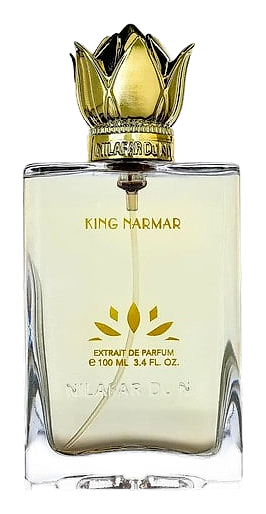
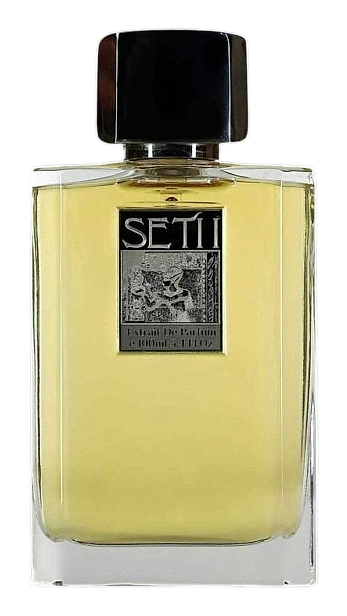
The name Seti I carries historical gravity all on its own. Nilafar du Nil builds compositions around figures of this stature, and Seti I is their portrait of a particular kind of authority, the sort that doesn't need to announce itself. The name carries the weight of the referent, but the juice does the talking. On skin, the opening unfurls with a dark, resinous density, oud grounding the composition immediately while rose threads through like an old whisper, neither fully sweet nor fully dry. There's a spiced warmth underneath, a flicker of saffron that catches light against the deeper notes. The accord reads as deliberate, composed, patient. Nothing about it rushes or pleads. It simply arrives, the way certain old buildings command a street corner without raising their voice.
What makes the composition unusual is the collision at its center. Oud and rose, the classical Arabic spine, share space with hazelnut, caramel, and honey, a gourmand stack that has no business being this grounded. The sweetness never tips into cloying territory. The leather and saffron hold the line, keeping the sweetness honest. It reads as dessert for someone who never lost their edge. As the hours pass, the hazelnut and honey settle into a softer register, warming against the oud's persistent shadow while the rose retains just enough presence to remind you it was there from the start.
The evolution
The first ten minutes belong to caramel and hazelnut, a sticky sweetness that arrives almost edible, like the surface of a crème brûlée still warm from the torch. Within twenty minutes, the leather cuts in, dry and structural, and the composition starts to behave like something else entirely. By the one-hour mark, the oud has surfaced, smoky and resinous, and the rose begins threading through it. This is where Seti I stops being a sweet fragrance and starts being a statement. The saffron catches at the edge, a dry spice that never fully melts in. At three hours, the base is settled: amber, oud, sandalwood, and patchouli holding a quiet, resinous line close to the skin. It doesn't project far at this point, but what remains is rich, almost incense-like, the kind of trace that follows a person into a room after they've left. By the next morning, what's left on skin is a faint ambery softness, the memory of something substantial that came before.
Cultural impact
Seti I draws on pharaonic and ancient Egyptian iconography for its identity and naming, situating Egyptian heritage as a living creative reference rather than a static historical artifact. The choice to anchor a gourmand-oud composition under a royal Egyptian name speaks to how contemporary perfumers translate ancient motifs into something wearable for a global collector base. There's a quiet confidence in the framing, the assumption that the audience already recognizes the reference and doesn't need it spelled out.