The Story
Why it exists.
The beginning
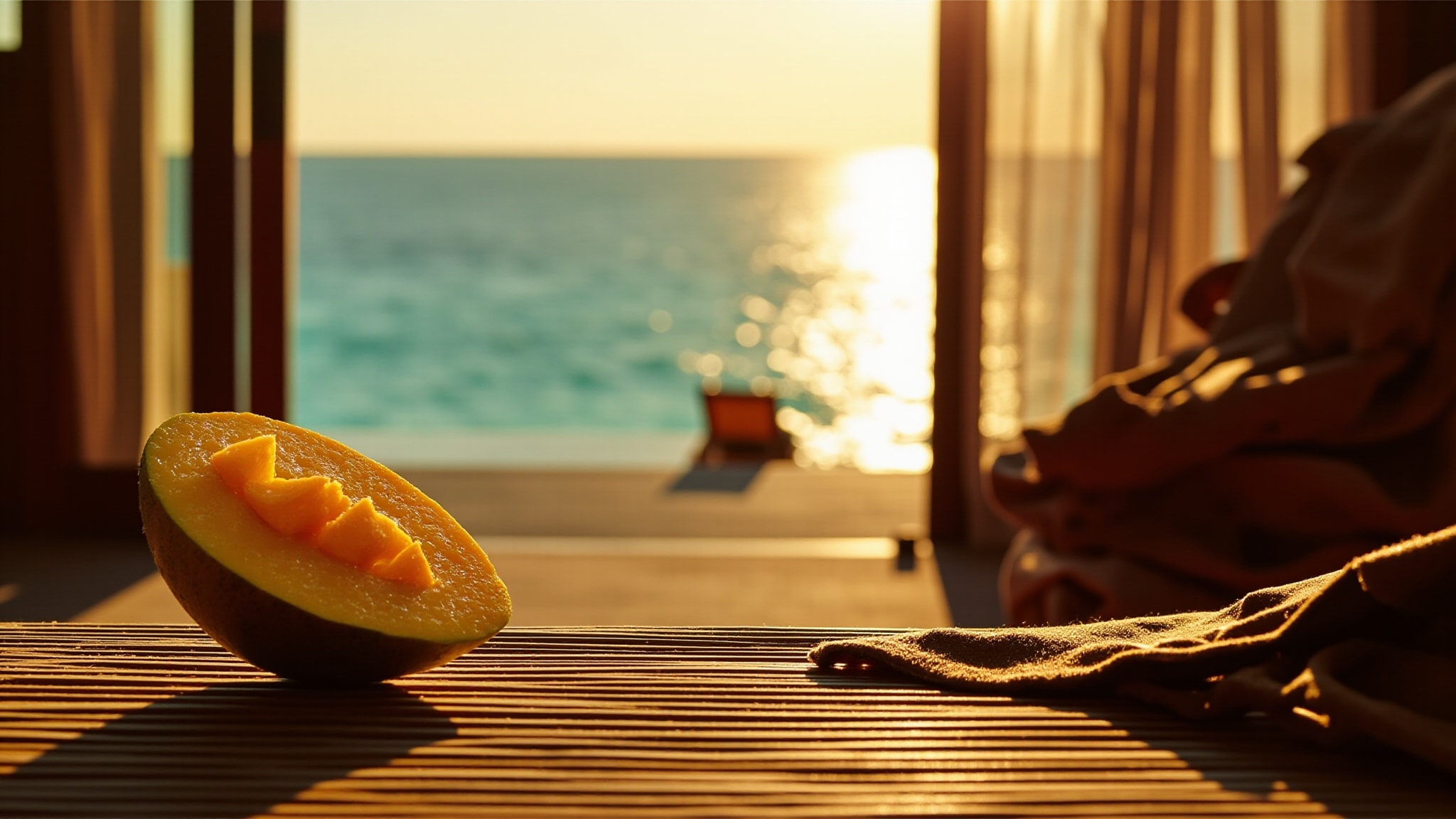
Trouble In Paradise didn't arrive from nowhere. It came from a place literally called paradise, the Maldives, an archipelago where the water shifts from turquoise to cobalt and the sunsets refuse to be subtle. The brand named it well. Paradise isn't uncomplicated. It's the moment you realize the mango you're eating is slightly overripe, that the rum in your glass costs more than your flight, that you're sunburned and happier than you've been in years. That's the trouble. That's the point. Shadi Samra built this fragrance as a sensory souvenir of that exact contradiction, the beauty and the slight edge underneath it.
The notes are unusual in how they refuse to behave. Mango is almost always rendered as a fresh, sanitized tropical note in mainstream perfumery, something sweet and inoffensive, the olfactory equivalent of a pool cocktail umbrella. Here, the mango opens alongside cognac, which is to say, it's treated like something worth aging. Cardamom adds a warmth that's almost resinous. The heart combines rum and caramel with leather and violet, a combination that sounds like it shouldn't work but does, because the sweetness is always fighting the darkness underneath. The base brings in oud, amber, ambroxan, and animalic notes, grounding the tropical brightness in something that smells like skin, warmth, and time.
The evolution
The opening announces mango in the first seconds. Not subtle. Not shy. Bright, juicy, almost sour in the best way. Within minutes, the cognac arrives, warm, boozy, spreading across the skin like the first sip of something good on a hot afternoon. Cardamom and bergamot keep it from becoming a smoothie. The first hour belongs to both: tropical sweetness and alcohol warmth, held together by spice. Around the 15-minute mark, the hand-off begins. Rum and leather arrive as the sweetness recedes, introducing a warmth that's less happy-hour and more late-night. Violet adds a powdery edge, caramel deepens into something almost smoky. The mango is still there but no longer leading. This is where the fragrance earns its name, paradise with an edge. The drydown, arriving around the hour mark, belongs to oud and amber. The mango becomes a memory. What lingers is animalic, warm, close to the skin. Moss and sandalwood create the final impression, something that smells like the end of a very good day.
Cultural impact
This fragrance captures the ongoing cultural embrace of tropical escapism in modern perfumery. As consumers increasingly seek sensory relief from digital overwhelm, vibrant mango paired with warm cognac offers a form of aromatic retreat. The inclusion of cardamom nods to long-standing perfumery traditions from the Middle East and South Asia, where spice-forward compositions have been treasured for centuries. This kind of blend reflects how contemporary fragrance houses bridge Western alcohol-based constructions with Asian approaches that often prioritize holistic sensory immersion over singular ingredient highlights. The name Trouble In Paradise itself mirrors a cultural move away from straightforward paradise tropes toward more layered and desirable complexity.