The Story
Why it exists.
The beginning
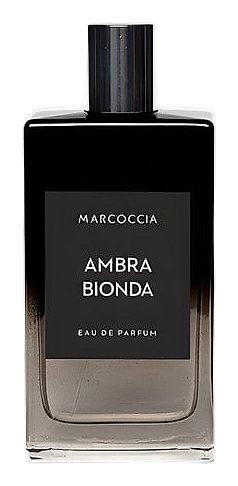
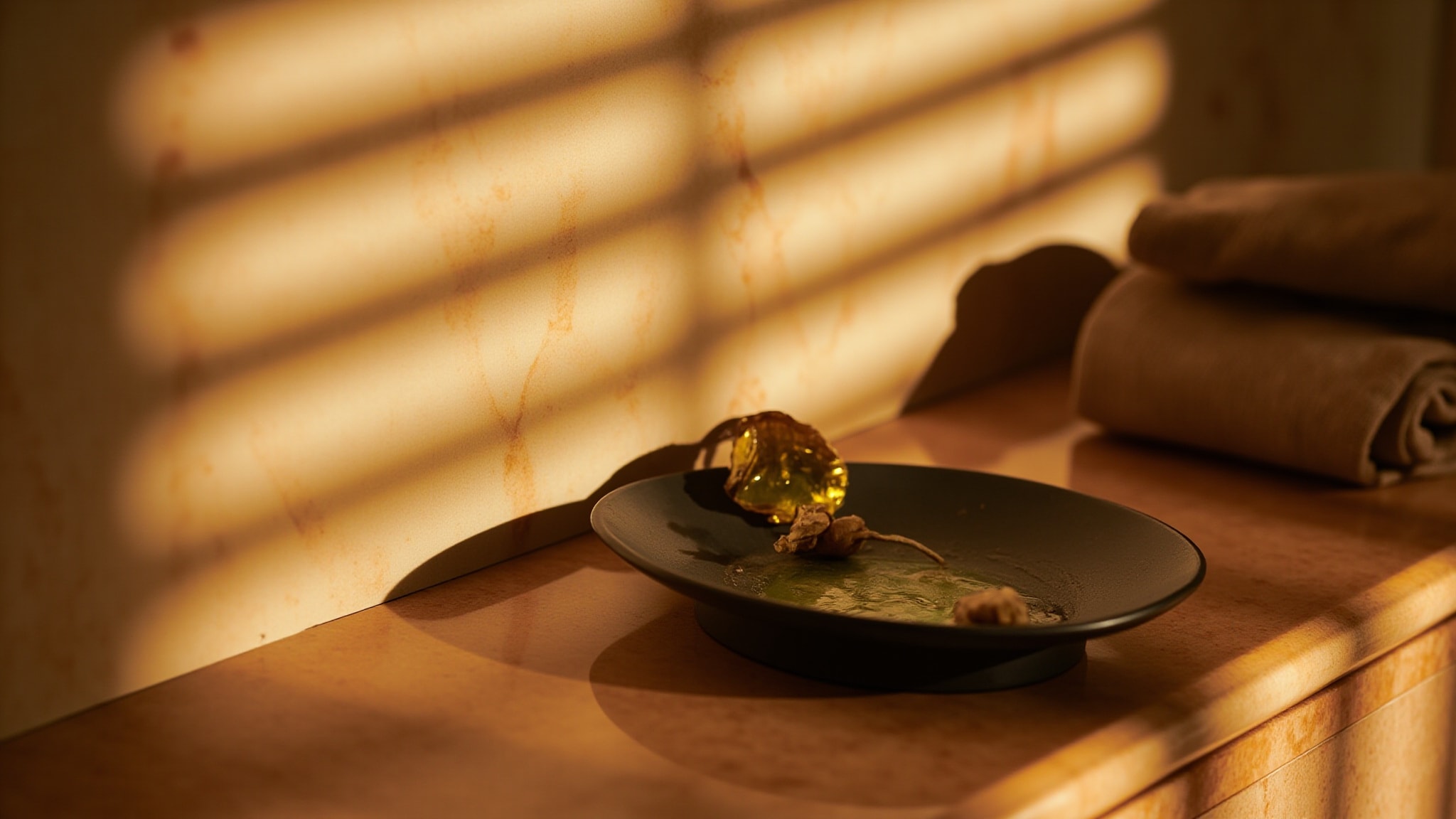
Ambra Bionda arrived in 2024 from Marcoccia. The name itself is a quiet argument: ambra means amber in Italian, but bionda adds the blonde, sun-warmed modifier. The color name promises something specific and the juice delivers on it: late-afternoon resin, the kind of light that hits old church pews or a glass of passito held up against a window, that thick golden hour glow that seems to have weight to it. There's an immediate sense of standing in a warm room where the shutters are half-drawn. The composition leans into the dense, devotional material of amber, labdanum, and myrrh, three ingredients that share a kinship around resin and shadow, around substance rather than sparkle.
What separates this from a hundred other amber compositions is how the individual notes behave in concert. The opening brings lavender and orange together, a combination that reads less like a typical bright start and more like the moment before brightness, the herbal and the citric holding hands at the threshold. Labdanum and myrrh do the heavy lifting in the heart, two resins that share a sticky, almost-candlewax warmth, the kind of warmth that calls up old wooden chapels and melted candle stubs pooled in brass holders.
The evolution
The lavender and orange at the opening read bright and herbal, a moment of clarity before the composition settles into its deeper register. As the first minutes pass, the citrus gradually recedes and the warmer materials start to surface, labdanum's thick warmth becoming more present, the almost-candlewax quality beginning to register on skin. Myrrh threads in alongside the labdanum, introducing something cooler and smokier underneath, a resinous shadow that adds depth rather than brightness. Within the first hour the composition has shifted noticeably, the lighter notes giving way to a denser, more substantial warmth. The two resins share center stage, complementing each other without ever quite merging into a single impression. Patchouli and cedar surface in the base phase, lending a dry, slightly earthy quality that balances what came before.
Cultural impact
Ambra Bionda enters a fragrance conversation where amber compositions have become a kind of touchstone, with resin-led profiles appearing across many houses and price points in recent years. What distinguishes this one is its particular restraint, the way it commits to the amber idea without piling on additional high-impact materials. The composition stays focused on its core ingredients and lets them do the work, refusing to reach for any of the louder signifiers that might compete with the central amber character. The result is something that reads as confident rather than showy, a fragrance that prefers intimacy to projection.