The Story
Why it exists.
The beginning
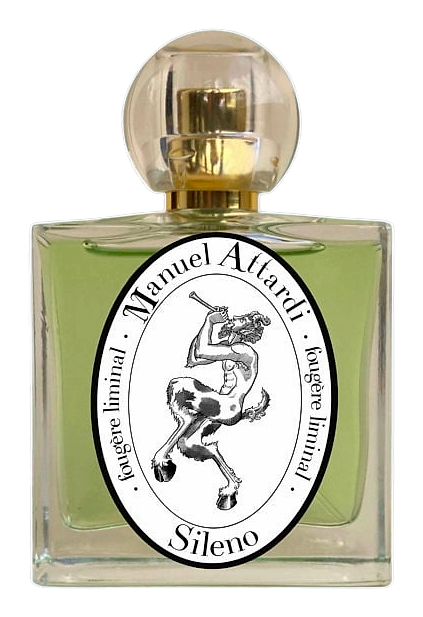
Sileno draws on the figure of the Wild Man, a creature caught between beast and sage, drunk and wise, earthy and untamed. Manuel Attardi, the perfumer behind his eponymous house, translates that ancestral figure into scent: not the polished god, but the rough, furred, half-animal force that follows him. The composition carries a painterly structure, a fougère stripped of its gentlemanly manners and rebuilt around mineral cold, animalic warmth, and the tension between the two. Sileno is part of an ongoing project, a wearable narrative rooted in myth and transformed into olfactory form.
What makes Sileno structurally unusual is the deliberate collision of registers. The top reads sharp, almost metallic, with bergamot and grapefruit pressed against a mineral note that smells closer to wet stone than any botanical. Then the heart pivots hard: bourbon geranium brings a dusty, slightly bitter floral edge, cypress adds a green resinous backbone, and saffron injects a leathery warmth that bridges the cold opening and the animalic base. The skin accord, created to recall the scent of human skin, is the hinge.
The evolution
The opening is a shock of cold. Grapefruit cuts first, sharp and slightly bitter, then bergamot rounds it into something cleaner, and the mineral accord sits underneath like the smell of rain on warm pavement. Lavender absolute and juniper keep the top from ever feeling truly fresh, though. There's a bruised, herbal quality from the start, the feeling of something green that's been walked through. The first minutes feel like a different fragrance than what arrives later, and that's the point. The heart introduces the skin accord early, and it warms the composition from the inside. Bourbon geranium arrives dusty and slightly soapy. Cypress cuts through with a resinous, almost pencil-shaving greenness. Saffron blooms last in the heart, giving the middle phase a warm, leathery undertone that reads more like suede than spice.
Cultural impact
Sileno stands as a fougère stripped of its gentlemanly manners and rebuilt around mineral cold, animalic warmth, and the tension between the two. The composition is built on a collision of registers, a deliberate friction between cold and hot, green and lactonic, refined and raw. Castoreum in the base, the mineral accord in the opening, the skin accord bridging the two: the architecture is confrontational, intended to be read as a character study rather than a crowd-pleaser.