The Story
Why it exists.
The beginning
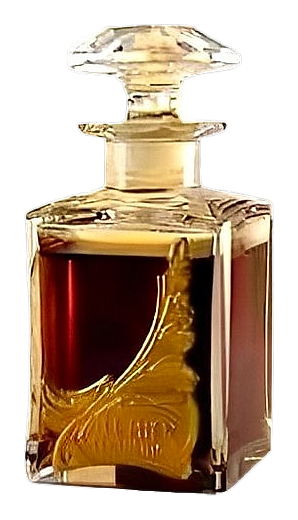
Released in 1922, Le Mien belongs to the early era of Lentheric, a house whose name had already begun to circulate beyond its earliest circle of clients. The name translates from French as "mine" or "my own," a possessive that suggests something held close rather than broadcast outward. It is listed among the house's earlier offerings, a women's composition from the period when the catalog was still being assembled and the house's identity was taking shape. As an early 20th-century composition, it carries the perfumery conventions of its moment, built around softness, restraint, and the close-skin intimacy that defined women's scents before louder styles took hold.
What makes a 1922 women's composition distinctive is what it chooses not to do. The composition privileges the wearer over the audience, structured to be discovered rather than announced, a scent that reveals itself slowly and only to those within reach. The result is something that asks the perfume to behave like a piece of fine stationery, personal, deliberate, and never loud. The notes follow classic early-century floral structuring, with a powdery softness that reads as refinement rather than nostalgia.
The evolution
On skin, Le Mien moves through its phases like someone lowering their voice mid-sentence. The opening arrives soft and cool, a light floral lift that reads almost translucent, the kind of first impression that could be mistaken for soap. The florals emerge from beneath that first translucent veil with a hush rather than a statement, settling in close without any sense of urgency. Within that first hour, the heart takes over, warmer, rounder, with a powdery depth settling in close. The drydown is where Le Mien earns its name. What lingers is a skin-close warmth, something faintly sweet and resinous, the kind of trace that stays on a scarf or collar for the better part of a day. On fabric it outlasts its skin presence, and the next morning what remains is a faint, intimate hum.
Cultural impact
Le Mien sits in a quiet corner of 20th-century perfumery, a women's composition from 1922 that has largely receded from the mainstream conversation but retains a dedicated following among those who seek out the overlooked corners of vintage scent. It's a scent for someone who doesn't need their fragrance to do the talking, a throwback to an era when the best perfumes were the ones only the wearer knew about. Today the composition lives largely through vintage bottles, private collections, and the occasional auction listing, a reminder that some of the most interesting work in early women's perfumery now survives only in fragments.